Shufangyuan Taoist temple in Beijing
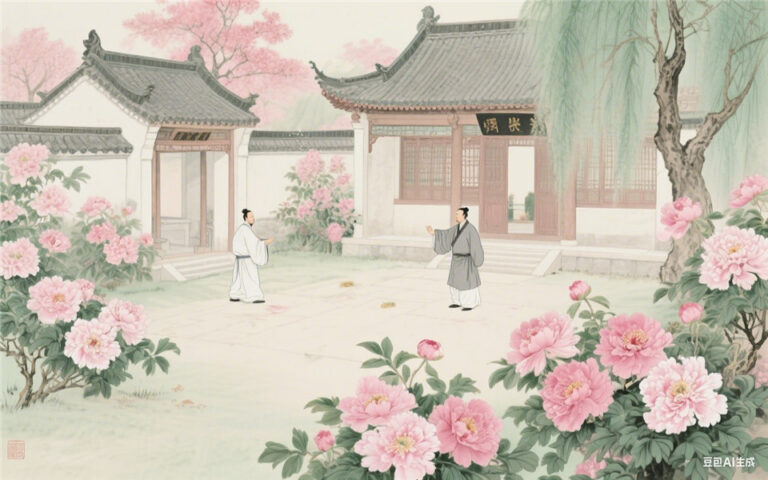
Shifangyuan Taoist Temple (Luquan City, Hebei Province) Shifangyuan Taoist Temple is located south of Happiness Bridge in Luquan City, Hebei Province. Luquan City was formerly known as Wolu County. According to the county records, “Jinque Palace, or Shifangyuan, is outside the west gate ……
In the seventh year of the Kangxi period (1668), Tang Yi, the county governor, and the Taoist priests Tang Guocui and Zhang Zhigui built it”. However, in recent years, cultural relics experts have found that the decorative gable tile formations on the back wall of the temple’s Yuanchen Hall are from the Yuan Dynasty, according to which the temple may have been first built in the Yuan Dynasty.
The gate of Shifangyuan is a yellow glazed tile-roofed pagoda-type three-coupon gate. After entering the gate, facing the Lingguan Hall, inward is the five ridges of the roof, surrounded by corridors of the Jade Emperor Hall. After the Jade Emperor Hall is the arch bridge roof of the Three Ancestors Hall. From the Three Ancestors Hall on both sides of the tunnel through, to the innermost Hall of the Three Ching.
These main buildings are all located on the central axis. On the east road, there are the Hall of Medicine King and the Hall of Cihang, and on the west road, there are the Hall of the God of Wealth, the Hall of City God and the Hall of Yuanchen. The entire compound is rigorously shaped, staggered heights, the scale is magnificent.
Medicine King Hall in front of the wall of the original inlaid a seismic monument, recorded in the Qing dynasty in the Guangxu period ten square courtyard after the earthquake reconstruction of the inscription. The monument is now the cultural relics department collection storage.
In the spring of 1996, the Luquan municipal government decided to re-use the Ten Square Courtyard as a Taoist place, and handed it over to the Taoist Association for restoration and opening. It is now a famous Taoist temple in Hebei.
References:
Zhang Chenguo, “The Taoist Temple of Shifangyuan,” in Chinese Taoism, No. 4, 2002.