Tianzhu Mountain Tianzuo Palace: A Thousand Years of Taoist Charm Lost in the Sea of Clouds
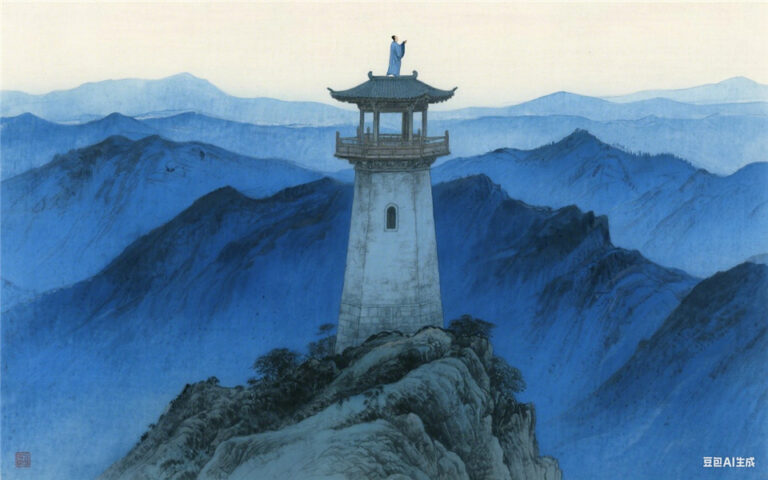
Deep in Tianzhu Mountain, north of Qianshan City in Anhui Province, the sea of clouds often rolls over the rugged peaks, as if guarding a secret realm forgotten by time. This is the site of the Tianzuo Palace, a Taoist temple that once captured the heart of Emperor Taizu of Song, now reduced to crumbling walls and ruins whispering amidst the pine groves.
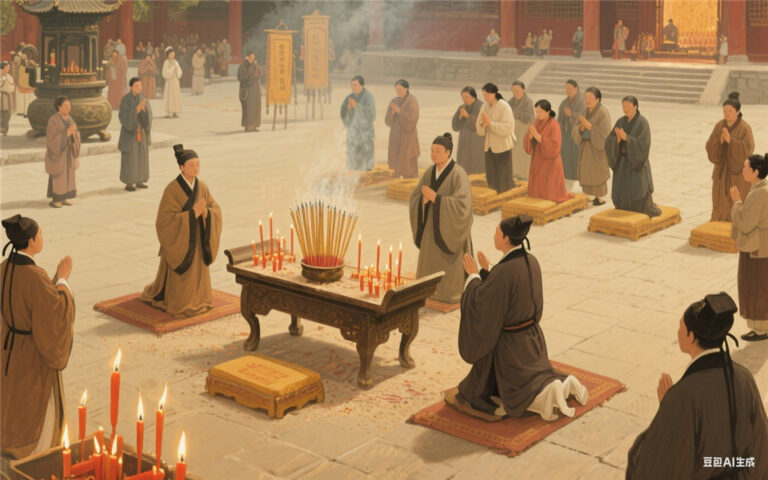
The story of the Tianzuo Palace began at the dawn of the Song Dynasty. When Zhao Kuangyin ended the turmoil of the Five Dynasties and Ten Kingdoms and established the Song Dynasty, this temple quietly emerged in the verdant valleys of Tianzhushān. In the ninth year of Kai Bao (976), Emperor Taizu sent envoys bearing a golden dragon and jade tablet to this mountain temple to pray for rain and blessings, immortalizing it in history. The jade tablet, engraved with imperial prayers, may have once shone with the lustrous glow of jade before the Three Pure Ones, while the scales and claws of the golden dragon bore the new dynasty’s yearning for favorable weather.
Time flows through the incense smoke, and the specific layout of Tianzuo Palace has faded away with the mountain mist. Did the common Daoist temple layout of the Three Pure Ones Hall and the Lingguan Hall appear here? Was the main deity worshipped the Jade Purity Primordial Lord, or the Black Tortoise Emperor, who has deep ties to Tianzhushān? These questions can now only be answered by the shovels of archaeologists. However, judging from the development of Daoism during the Song Dynasty, this place must have once echoed with the solemn sounds of morning bells and evening drums, the clear voices of Daoist priests chanting scriptures, and pilgrims walking along winding mountain paths to make their wishes before the divine statues.
Today, walking through the ruins, only scattered blue stone slabs and half-buried column bases remain, whispering of the past layout. In spring, wildflowers bloom in the cracks of the broken walls, and one can almost see the figures of Taoist priests in their robes moving through the flowers; in autumn rain, raindrops strike the remaining stone steps, and the echoes seem to still carry the prayers of the past. Local villagers can still point out the location of “Gongji Ping,” and in the stories passed down through generations, there are always legends about the old Taoist priests in the palace who could control the weather.
The sea of clouds on Tianzhou Mountain remains ever-changing, but the ruins of Tianzuo Palace have solidified into a cultural landmark in the flow of history. It is not only a testament to the interaction between the Song Dynasty royal family and Daoism but also carries the spiritual essence of Tianzhong Mountain as a place where “Daoism and Buddhism converge.” When visitors discern the faint foundations amidst the mist, they may hear the echoes of incense and mountain winds intertwining through the centuries.