Nanhui City God Temple: A Faith Landmark Lost in Time
In the southwestern corner of Shanghai’s old Nanhui city, there once stood a Taoist temple that had been around for 500 years—the Nanhui City God Temple. This ancient structure, mentioned only briefly in local annals, though now buried in the dust of time, still holds within its crumbling bricks and tiles the intertwined history of a Jiangnan town and its folk beliefs.
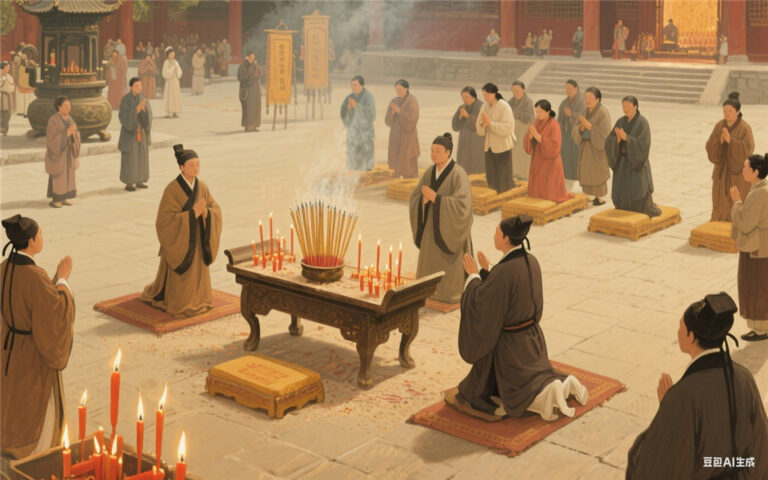
In the 21st year of the Hongwu era (1388), when Chen Meng oversaw the construction of the City God Temple, Nanhui had not yet become an independent county. The temple’s establishment coincided with the history of fortification and defense in the Shanghai region. During the early Ming Dynasty, the coastal regions were unstable, and Nanhuai, located on the southeastern coast, saw the construction of the City God Temple as both a folk expression of devotion to the guardian deity and a strategic consideration by the government to stabilize local order. Though modest in scale at its inception, the temple adhered to Daoist architectural norms, with a central axis running through the mountain gate, stage, and main hall. The solemn deity statues and growing incense offerings made it an important spiritual refuge for local residents.
Over a century later, in the sixth year of the Yongzheng reign of the Qing Dynasty (1728), Magistrate Qin Lian undertook the first major renovation of the temple. This official, who oversaw the compilation of the “Inscription on the Establishment of the Nanhui County Government” during his tenure, deeply understood the governance wisdom of “establishing teachings through the divine.” He transformed the original simple gate into a red-lacquered, colorfully painted archway-style mountain gate and added three ceremonial gates, giving the temple a completely new appearance. After the renovation, the City God Temple was not only a place for religious activities but also a public space where the county government held sacrifices and preached village regulations, skillfully integrating religious and administrative functions.
In the 49th year of the Qianlong reign (1784), Magistrate Zhang Daqi’s initiative to renovate the temple brought it to its peak. The renovation was funded by public donations, and a stele was erected after completion to commemorate the event. The inscription on the stele, which reads, “The villagers enthusiastically contributed, and the project was completed in no time,” clearly demonstrates the temple’s cohesive role within the local community. At that time, the City God statue in the main hall was already sculpted according to official regulations, wearing a black hat and a dragon-patterned robe, with judges and attendants arranged before the seat. The wall paintings depicted warning patterns such as the “Eighteen Levels of Hell,” concretizing the Daoist doctrine of “karma” into visual art.
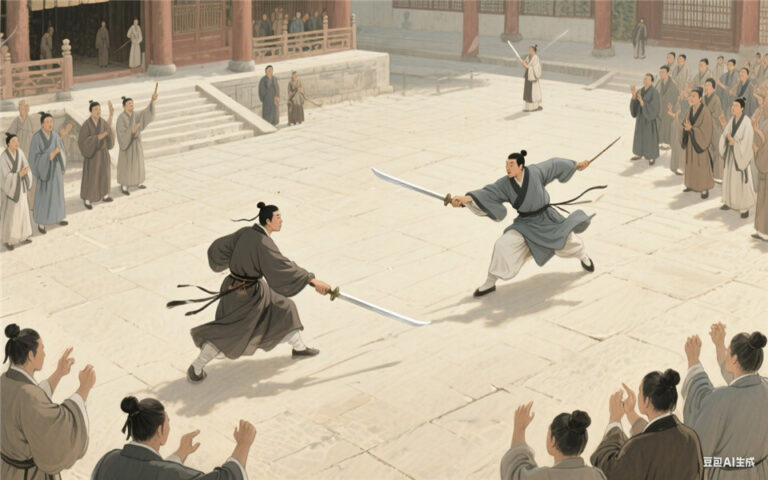
In the 18th year of the Jiaqing reign (1813), the temple underwent its final major renovation, led by local gentry Zheng Renkang. By this time, Nanhui had evolved from a coastal salt marsh into a land of fish and rice. The scale and craftsmanship of the temple’s renovations reached their peak, with wood carvings, brick carvings, and stone carvings adorning the halls. The spiral brackets of the “ceiling” on the stage were particularly exquisite, and during performances of ritual plays, the sound waves reflected off the arches and echoed throughout the entire square.
With the passage of time, this ancient temple that had endured four dynasties eventually fell into ruin. Today, in the alleys of old Nanhui, only the place name “City God Temple Alley” mentioned by the elderly can evoke vague memories of that red-walled, yellow-tiled complex. Its rise and fall are not merely the lifecycle of a Daoist temple but also reflect the profound transformations of the Jiangnan region from an agrarian society to a modern metropolis, becoming a collective memory etched into the cultural DNA of the region.