Songjiang West Lake Daoist Temple: A Thousand-Year Legacy of Daoist Culture
In the long history of Songjiang, Shanghai, the Songjiang West Lake Daoist Temple once stood as a unique cultural landmark. Located in the southwest of the former Songjiang City, it weathered the storms of the Yuan, Ming, and Qing dynasties, bearing witness to the passage of time and preserving precious memories tied to Daoist culture. Though now in ruins, its past rise and fall remain worthy of exploration.
Founded in the Yuan Dynasty: The Birth of the Daoist Temple
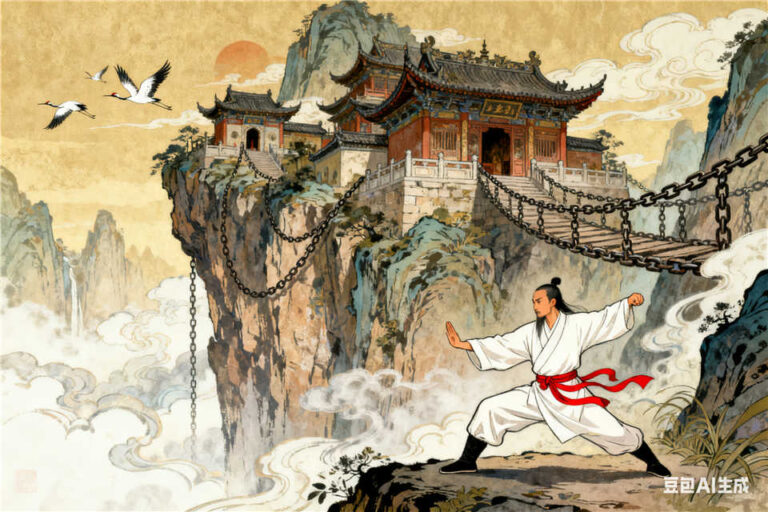
The story of the Songjiang West Lake Daoist Temple began in the first year of the Zhi Zheng era of the Yuan Dynasty (1347). During this period, Daoism had a significant influence among the common people. Daoist priest Shao Yizhong, driven by his devotion to and commitment to preserving Daoist culture, selected a site in the southwest of Songjiang City and oversaw the construction of this Daoist temple. Though the Daoist temple may not have been grand in scale at its inception, its establishment provided local Daoist believers with a place for scripture recitation, spiritual cultivation, and prayers for blessings and disaster prevention, while also adding new elements to the religious and cultural development of the Songjiang region. At that time, the Taoist temple exuded an ancient and simple charm with its blue-tiled roofs and green bricks. Incense began to burn within its walls, and the sounds of morning bells and evening drums echoed across the southwest sky of Songjiang City, gradually becoming a prominent religious structure in the area.
Ming Dynasty Renovations: The Taoist Temple’s Two Revitalizations
As time progressed into the Ming Dynasty, the Songjiang West Lake Taoist Temple underwent two significant renovations, enabling it to regain its vitality despite the ravages of time. In the 14th year of the Zhengtong reign (1449), Daoist monk Ji Yining noticed that the temple had fallen into disrepair due to neglect, with some structures showing signs of decay. He voluntarily took on the responsibility of overseeing the renovations. He led the efforts to repair damaged walls, replace rotten beams and columns, and repaint the halls, restoring the Daoist temple to its former orderly and solemn appearance. This renovation not only preserved the architectural style of the Daoist temple but also allowed Daoist activities to continue normally.
During the Chenghua era (1465–1487), Daoist priest Cai Yuanjing undertook another major renovation of the Daoist temple. This renovation not only maintained the architecture but also expanded and improved it based on the original structure. Cai Yuanjing paid attention to the details of the temple’s decoration, adding carvings and paintings with Taoist cultural characteristics, making the cultural atmosphere of the temple even more profound. After these two renovations, the scale of the Songjiang West Lake Taoist Temple continued to expand, and its influence gradually increased, becoming a well-known Taoist site in the Songjiang region at that time.
Changes in the Qing Dynasty: From Reconstruction to Gradual Decline
During the Qing Dynasty, the fate of the Songjiang West Lake Taoist Temple underwent significant changes. In the 22nd year of Emperor Kangxi’s reign (1683), General Yang Jie, the commander-in-chief of the Zhaowu Army, undertook the reconstruction of the temple. Despite being a military officer, Yang Jie had a deep interest in Daoist culture. He understood the temple’s significance in the hearts of the people and invested substantial resources into its comprehensive reconstruction. The rebuilt temple featured more grand and magnificent architecture with a more rational layout. The halls and pavilions within the temple were arranged harmoniously, and the incense offerings grew increasingly vibrant, ushering in another prosperous period in its history.
However, the inevitable cycle of decline eventually took hold. By the Jiaqing era, the temple had fallen into disrepair, with only the Jade Emperor Pavilion remaining, standing alone on the original site, a testament to its former glory. What is even more regrettable is that there was once a Ma Wang Temple beside the Daoist temple. Although its exact founding date is now unknown, it had stood alongside the Daoist temple for many years, together forming part of the local religious architecture. Now, it too has fallen into disrepair alongside the decline of the Daoist temple. Over time, the entire Daoist temple and Ma Wang Temple succumbed to the combined effects of weather erosion and human factors, ultimately leading to their gradual abandonment. Only a few remnants remain for future generations to commemorate.
The rise and fall of the Songjiang West Lake Taoist Temple is a microcosm of the historical and cultural development of the Songjiang region. It carries the cultural memories of Taoism from the Yuan, Ming, and Qing dynasties. Although it no longer exists today, the imprint it left in history remains an indispensable part of Songjiang’s cultural treasure trove, waiting for us to uncover and remember.