Huating Mengsu Daoist Temple: Echoes of Daoism Through the Ages
I. The Mysterious Beginnings
Huating Mengsu Daoist Temple, a Daoist temple steeped in history, is located in the southeast of the former Huating County, Shanghai. Its origins are shrouded in mystery. According to legend, it was founded during the Zhizheng period of the Yuan Dynasty (1335–1340) by Zhu Zhi Guan of the Tongbai Palace in Tiantai. At that time, in the southeastern region, Zhu Zhi Guan may have been driven by his devotion to Daoism and his aspiration to promote its teachings, choosing this location to break ground and establish a place for Daoist cultivation. In the social context of the era, Daoism was flourishing, and the people’s pursuit of religious faith provided the fertile ground for the birth of Mengsu Daoist Monastery. It took root like a seed of hope on this land.
II. The Process of Multiple Renovations
- The First Major Renovation
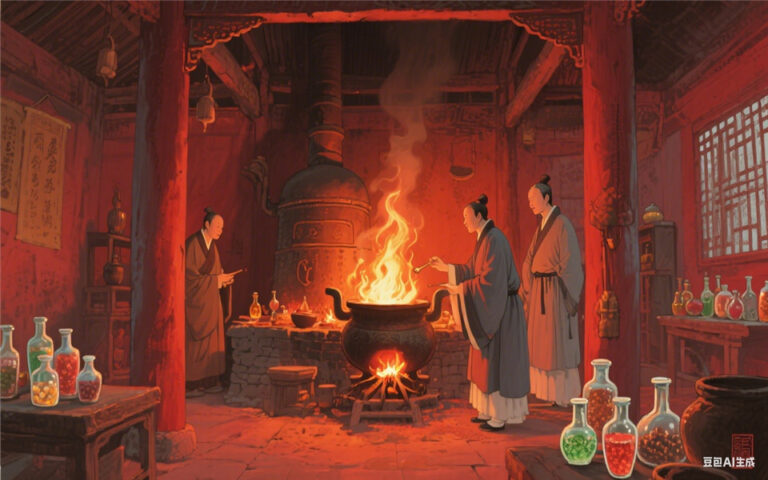
During the Zhizheng era (1341–1368), Taoist priests Wu Chanyou and Wang Yuanjing undertook a major renovation of Mengsu Daoyuan. After years of weathering, the originally constructed Daoyuan may have suffered structural damage. Wu Chanyou and Wang Yuanjing, out of respect for this sacred Daoist site, raised funds from various sources, gathered craftsmen, and carried out a comprehensive renovation of the monastery. They may have reinforced the structural integrity of the buildings, repainted the walls of the monastery, and revitalized the site, presenting it in a renewed form to welcome believers and practitioners, thereby establishing it as a significant venue for Daoist activities at the time. - Another renovation during the Ming Dynasty
In 1469, the Taoist temple underwent another major renovation. At that time, society was relatively stable, the economy had developed somewhat, and religious culture had further flourished. When faced with a drought, Prefect Tian Zhen went to the Mengsu Taoist Temple to pray, and perhaps by coincidence, rain followed, an event that made the temple even more sacred in the hearts of the people. Tian Zhen then ordered the resident monk Wang Weiduan to oversee the renovation of the Taoist temple. This renovation likely optimized the temple’s layout based on the original structure and added some auxiliary facilities to accommodate the growing demand for religious activities.
III. Glory and Decline - The Construction and Collapse of the Sanqing Pavilion
In the fourth year of the Zhengde era (1509), Daoist priest Wang Dajing constructed the Sanqing Pavilion, marking a glorious moment in the development of the Mengsu Daoist Temple. As a place of worship for the Three Pure Ones, the highest deities of Daoism, the pavilion must have been magnificent in design. Its completion not only elevated the temple’s religious status but also made it one of the region’s iconic landmarks, attracting numerous devotees to pay their respects. However, time is relentless, and the Sanqing Pavilion eventually collapsed, perhaps due to natural disasters or neglect over the years. This once-glorious structure ultimately turned into ruins, leaving only memories of its former grandeur. - Reconstruction and Final Abandonment
During the Tianqi era (1621–1627), the monastery underwent reconstruction in an attempt to restore its former glory. Yet history was unkind, and the rebuilt Taoist temple eventually fell into disuse. This may have been due to the social upheaval caused by dynastic changes, economic decline rendering the temple unsustainable, or a shift in religious focus, leading to the gradual neglect of Mengsu Taoist Temple. It faded into obscurity, its story preserved only in historical records.