Qingpu Gaozhen Taoist Temple: A Timeless Relic of Jiangnan’s Taoist Heritage
1.Overview of the Taoist Temple: The “Southern Holy Hall” Imprint in Shenxiang
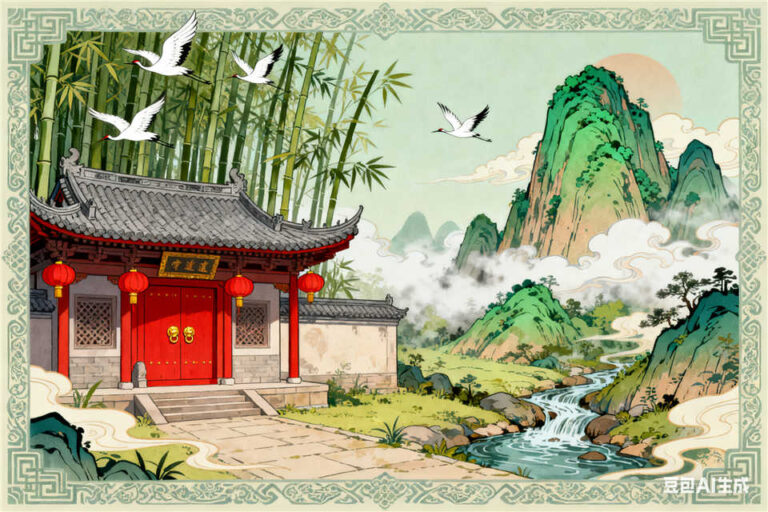
Qingpu Gaozhen Taoist Temple is situated in the Shenxiang area of Qingpu District, Shanghai. This land, once part of Qingpu County, has long been steeped in the gentle ambiance of Jiangnan’s water towns, providing fertile ground for the growth of Taoist culture. Beyond its formal name “Gaozhen,” the monastery is also known colloquially as the “Southern Holy Hall.” This nickname likely stems from its location within Shenxiang—presumably situated south of the village—or from generations of local devotees affectionately referring to it by this name, cementing it as an alternative identity in popular memory. As a historically documented Daoist site in Qingpu, though it leaves no grand extant structures, it preserves invaluable clues about Daoist activities from the Ming to Qing dynasties within local annals and folk memory.
2.Historical Development: The Rise and Fall of a Taoist Temple Built Across Two Dynasties
The history of Gaozhen Taoist Temple began during the Jiajing reign (1522–1566) of the Ming Dynasty. At that time, Taoism still held significant influence in the Jiangnan region. Taoist priest Zhao Kezhen chose Shenxiang as the site for establishing the temple, driven both by his personal commitment to cultivation and propagation of the Taoist faith, and by the local populace’s demand for Taoist spiritual guidance. Although the Jiajing era saw a nationwide flourishing of Taoism due to the emperor’s devotion, the establishment of grassroots Taoist temples relied heavily on the initiative of Taoist priests and the support of local believers. Zhao Kezhen’s founding of the temple thus became a microcosm of Taoist development in Qingpu at that time.
Time flowed onward to the fourteenth year of the Jiaqing reign (1806) in the Qing dynasty, when the Taoist monastery underwent a significant renovation. The driving force behind this restoration was not Taoist priests, but rather the “local villagers”—meaning local gentry or ordinary citizens.
3.Architecture and Faith: Reasonable Speculation on Vanished Regulations
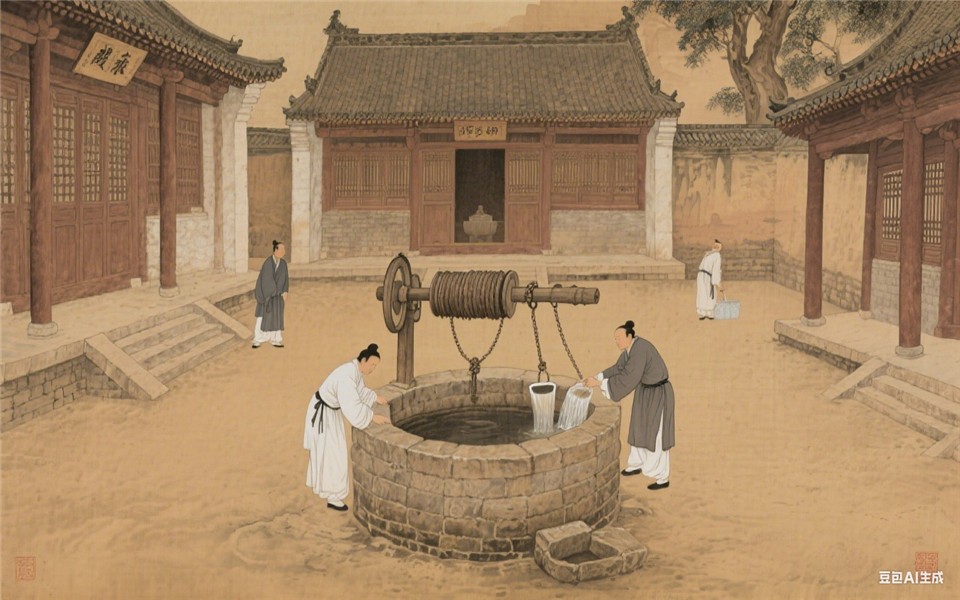
As the Taoist temple has long been in ruins, extant historical records offer no detailed accounts of its architectural form. However, drawing on the common characteristics of Taoist temples in the Jiangnan region during the Ming Dynasty, a brief reconstruction is possible. Its scale was likely modest, with core structures including a main hall dedicated to the Taoist deity Gaozhen (such as the Hall of the Three Purities or the Hall of the Jade Emperor). with a mountain gate potentially positioned before the main halls and supporting facilities like monks’ quarters and dining halls behind. The overall layout likely adhered to the traditional architectural principle of “central axis symmetry,” possibly incorporating the light and delicate style characteristic of Jiangnan water town architecture—such as brick-and-wood structures with black-glazed tiles and whitewashed walls—harmonizing with the surrounding farmland and waterways.
In terms of religious activities, the Taoist temple likely served functions such as daily scripture recitation, ritual ceremonies, and blessings for the community. During the Ming Dynasty, Zhao Kezhen likely expounded Taoist scriptures and presided over sacrificial rites here for devotees. After its Qing Dynasty reconstruction, it may have hosted regular temple fairs and festive events, becoming a center for folk activities in Shenxiang and surrounding areas. Taoist culture thus permeated local customs—from weddings and funerals to seasonal observances.
4.Cultural Value: Echoes of History in Ruins
Though Gaozhen Taoist Temple no longer stands, its historical significance remains undeniable. From a local history perspective, it serves as tangible evidence (albeit documented only in records) of Taoist development in Qingpu during the Ming Dynasty, filling gaps in research on grassroots Taoist sites in Jiangnan. Notably, the recorded “local reconstruction” provides a crucial case study for examining interactions between Qing-era folk communities and religious venues. From a cultural heritage perspective, the monastery’s rise and fall mirrors the trajectory of religious beliefs in the Jiangnan region during the Ming and Qing dynasties, reflecting Taoism’s deep integration with folk society—it served not only as a religious space but also as a repository of local cultural memory.
For contemporary Qingpu, the historical records of Gaozhen Taoist Temple remind us that beneath this landscape dominated by modern urban features lies a profound legacy of traditional culture. Uncovering and organizing the temple’s history not only safeguards local cultural heritage but also offers historical insights for contemporary cultural development, allowing the echoes of Jiangnan’s Taoist tradition to resonate anew in the modern era.