
Shanghai Ziyang Palace: A Chronicle of the Rise and Fall of Modern Quanzhen Taoist Nuns
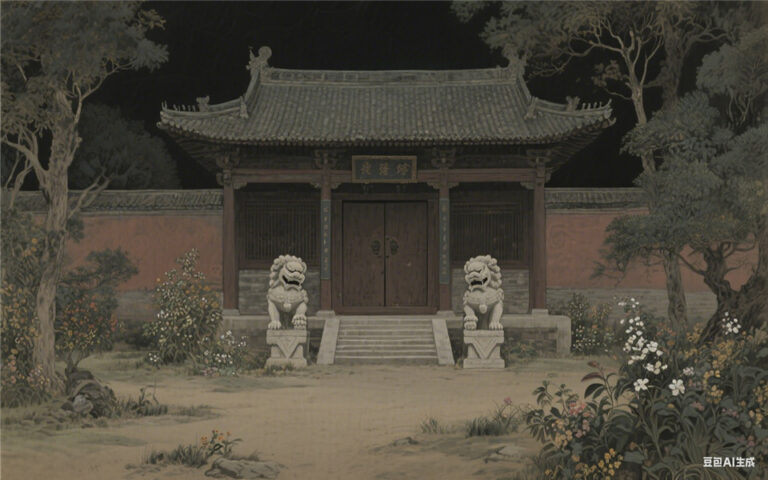
On the west side of Jiaozhou Road along Wuding West Road in Shanghai once stood a Taoist temple bearing the unique memories of modern Shanghai Taoism—Ziyang Palace. Though not a millennia-old temple, it left an indelible mark on Shanghai’s religious landscape of the 1930s as the city’s first temple dedicated to female Daoist priests. Its rise and fall reflect the profound intertwining of Quanzhen Daoism with modern Shanghai society.
1. Foundational Beginnings: The Shanghai Expansion of Tiantai’s Ziyang Palace (1933)
The origins of Ziyang Palace are inextricably linked to the itinerant journey of two Taoist priests from Wenling, Zhejiang. In 1933, Chen Tiehai and Cai Qiliang, priests of the Quanzhen Ziyang Palace, arrived in Shanghai with the aspiration to raise funds for the temple’s restoration. By then, Shanghai had become the foremost metropolis in the Far East. The Caojiadu area, thriving with industry and commerce, saw a growing population and gradually became fertile ground for religious activities. The two priests established the “Shanghai Branch of Tiantai Ziyang Palace” there, with Chen Tiehai personally serving as abbot, formally launching Ziyang Palace’s history in Shanghai.
During this period, the branch remained a traditional male-only Daoist temple. Though modest in scale, it laid the groundwork for future development. It served not only as an extension of Wenzhou’s Ziyang Palace in Shanghai but also became a window through which the Quanzhen School engaged with the lives of Shanghai’s citizens. The demand for religious solace among workers and residents in western Shanghai at that time provided the social foundation for the branch’s survival and transformation.
2. Transformation: From Male-Only Branch to Female-Only Temple (1935)
The year 1935 marked a pivotal turning point in Ziyang Palace’s destiny. That year, Chen Tiehai broke with tradition by accepting two female factory workers as disciples, permitting them to reside in the temple for cultivation while supporting their fundraising activities outside the premises. This move was no coincidence: Shanghai’s female factory workers in the 1930s faced grueling labor and survival pressures, with some seeking spiritual solace through religion. Taoism’s philosophy of “quietude and non-action” resonated deeply with their needs.
With these two women joining the Daoist path, Ziyang Palace formally transformed into “Shanghai’s first temple for female Daoist practitioners.” Subsequently, more female workers entered the palace to study Daoism. This transformation received strong support from both the Daoist community and society at large: Daoist theorist Chen Yingning provided doctrinal guidance, while medical professionals Zhang Zhuming and Shen Liangsheng, along with local luminary Wang Boying, offered financial and material support. It was the convergence of these forces that enabled this emerging female Daoist temple to establish a firm foothold.
3. The Golden Age: The Glory of Ziyang Palace’s Kun Dao Academy (1938)
In 1938, Ziyang Palace reached its developmental zenith. With financial backing from Shanghai’s western gang leaders, Chen Tiehai leased land on Wuding West Road to formally construct the temple, renaming it “Ziyang Palace Kun Dao Monastery.” This renaming not only clarified its status as an “exclusive sanctuary for Kun Dao (female Daoist priests)” but also signified its evolution from a “branch monastery” to an independent temple.
At this time, Ziyang Palace Kun Dao Monastery primarily venerated Wei Boyang, the Ziyang Immortal—a pivotal figure in the Quanzhen School. Its doctrinal transmission and ritual practices became increasingly refined. As female Taoist priests could more readily connect with female devotees, their religious services and rituals flourished. During each ceremony, crowds of believers gathered, leading to a significant increase in economic income. Ultimately, it became “the foremost Quanzhen temple in Shanghai.” This era of “flourishing religious services and economic prosperity” was both the result of the nuns’ dedicated efforts and a reflection of the modern Shanghai religious market’s recognition of the services provided by the nuns.
4. Twilight and Decline: The Curtain Falls on an Era
Regrettably, the splendor of Ziyang Palace’s nunnery did not endure long before it fell into ruin. Historical records offer limited details on the exact timing and circumstances of its decline, but modern Shanghai’s social transformations suggest that war-induced turmoil, shifting social structures, and changing religious landscapes likely played pivotal roles in its demise.
Though Ziyang Palace no longer stands, its historical significance remains undeniable. As Shanghai’s first temple dedicated to female Daoist practitioners, it broke the traditional male-dominated structure of Daoist temples, providing a dedicated space for women seeking spiritual cultivation. Its developmental trajectory—marked by interactions among Daoist figures, female laborers, secret societies, and social elites—serves as a crucial case study for examining modern Shanghai’s religious and social dynamics. Today, though its traces are hard to find in the alleys of Wuding West Road, this chapter of the Quanzhen female Taoist tradition continues to add a unique hue to Shanghai’s religious history.