Huating Crane Temple: A Taoist Cultural Imprint of Songjiang Prefecture
Within the historical fabric of Huating County, Shanghai, Huating Xianhe Temple—nestled east of Zhenqiao Bridge during the Southern Dynasties—may not have been grand in scale, yet its unique cultural significance established it as a pivotal landmark in the development of Daoism within Songjiang Prefecture. It preserves the Daoist heritage of the Song and Ming dynasties, with every surviving relic narrating tales of bygone vitality and devotion—from its obscure origins to its documented restoration and expansion.
1. Geographic Location and Historical Origins: A Millennia-Old Puzzle with Clear Coordinates
The temple’s geographic coordinates precisely pinpoint “east of Zhenqiao Bridge in Southern Dynasties-era Huating County, Shanghai.” This specific location provides crucial clues for later generations seeking its traces. Yet, in stark contrast to its clear positioning, the exact date of its founding remains an unsolved mystery. Historical records offer no explicit documentation of its founding period. It lacks the illustrious background of imperial decree or detailed accounts of donations by prominent scholars, appearing as if it emerged quietly in the river of history. Yet through subsequent development, it secured its place within Huating County’s religious landscape. This characteristic of “obscure origins yet clear later history” adds an air of mystery, sparking researchers’ curiosity about its early religious form and societal influence.
2. Song Dynasty Reconstruction: Ye Taizhen and the “Rebirth” of Xianhe Temple
Though its founding date remains unverified, the development of Huating Xianhe Temple was not without turning points. In the 31st year of the Shaoxing era (1161), the reconstruction project overseen by Ye Taizhen, a Daoist priest of the Tianzhen Temple, marked a pivotal turning point in the temple’s history. By this time, Daoism had established a certain foundation in the Jiangnan region. Ye Taizhen’s decision to rebuild the Xianhe Temple in Huating was not merely a restoration of a local religious site but also reflected the continuity and interconnectedness among Daoist sects. This reconstruction breathed new life into what might have been a dilapidated or modestly scaled temple, laying the material foundation for its subsequent growth. Historical records indicate that following this renewal, Huating Xianhe Temple began to emerge as a more standardized Daoist site, gradually entering the scope of local religious administration and becoming a key hub for Daoist activities in Huating County.
3. Ming Dynasty Regulations: Dual Empowerment of Architectural Layout and Administrative Function
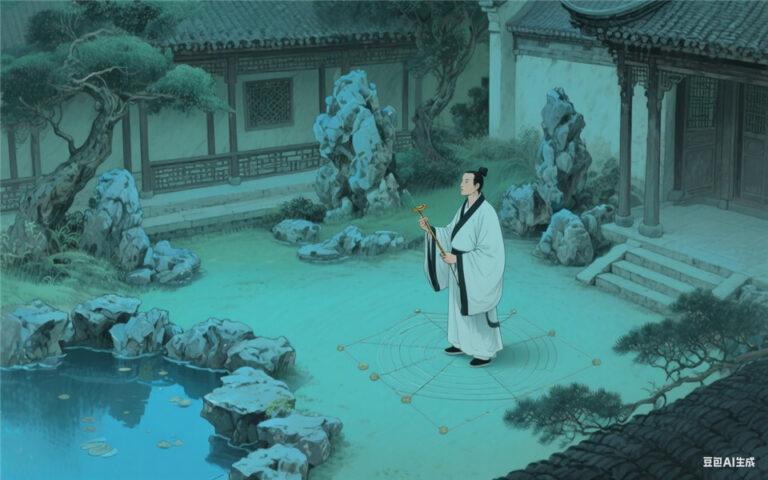
The Ming Dynasty marked the zenith of development for Huating Xianhe Temple. During this period, its architectural layout matured into a comprehensive system encompassing the Liao Yang Hall, Tianbao Pavilion, mountain gate, bell and drum towers, and flanking auxiliary buildings. The Mountain Gate, serving as the entrance, radiated solemnity and dignity, guiding devotees into sacred space. The Bell and Drum Towers flanked either side, their morning bells and evening drums once echoing east of Zhenqiao Bridge in the Southern Dynasties, marking the passage of time for local residents. The Liao Yang Hall, as the central sanctuary, housed Taoist deities and served as the primary venue for religious ceremonies. Tianbao Pavilion likely housed Daoist scriptures or served as a meditation space for priests. The overall layout adheres to the Daoist principle of “unity between heaven and humanity,” achieving compactness without sacrificing order.
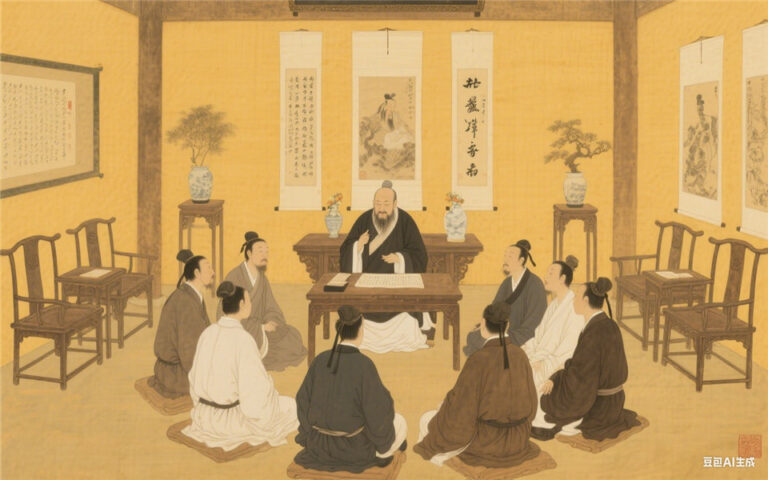
More significantly, during the Ming Dynasty, Huating Xianhe Temple assumed administrative functions as the seat of the Daoist Conference Bureau. The Daohui Bureau was a local Taoist administrative body during the Ming Dynasty, responsible for coordinating Taoist affairs within its jurisdiction, overseeing Taoist priests’ conduct, and regulating religious activities. This role elevated Huating Xianhe Temple beyond that of an ordinary Taoist temple, making it the central hub for Taoist administration in Songjiang Prefecture. Its influence extended beyond Huating County, radiating throughout the entire Taoist sphere of Songjiang Prefecture.
4. “The Premier Qionglin Palace”: Cultural Significance Beyond Scale
Historical records explicitly state that Huating Xianhe Temple, “though not large in scale, has always been the premier Qionglin Palace in Songjiang Prefecture.” “Qionglin Palace” is an elegant designation for Taoist temples, and the “premier” status was not based on architectural grandeur but on its profound cultural heritage and significant religious standing. On one hand, as the seat of the Daoist Conference Office, it administered Daoist affairs across Songjiang Prefecture, serving as the guardian of local Daoist order. On the other, through its continuity from the Song to the Ming dynasties, it amassed rich Daoist cultural resources, leading all temples in Songjiang in preserving religious rituals and safeguarding Daoist scriptures. Moreover, its location in Huating County offered convenient transportation, and its position south of Zhenqiao Bridge made it a vital gathering place for devotees and cultural exchange. Over time, this established a consensus in Songjiang Prefecture that it was the foremost among Taoist temples, becoming a symbol of local Taoist culture.
Though Huating Xianhe Temple lacks earth-shaking historical events, its sustained legacy, distinct functions, and unique status have left an indelible Taoist imprint on the history of Huating County in Shanghai. It bore witness to the evolution of Jiangnan Taoism during the Song and Ming dynasties, while also providing invaluable physical and historical evidence for contemporary research into local religious culture and architectural history. Its reputation as the “First Among Qionglin Palaces” continues to radiate cultural brilliance to this day.