
Shanghai Dajing Temple: A Frozen Memory of Shanghai on the City Walls
Nestled along Dajing Road in Shanghai’s Huangpu District stands Dajing Temple, a cultural landmark bearing over four centuries of history. More than a witness to the old city’s past, it uniquely blends architectural artistry, folk beliefs, and natural scenery, now serving as a vital window into Shanghai’s cultural heritage.
I. Historical Origins: From City Wall Arrow Tower to Guan Yu Sanctuary
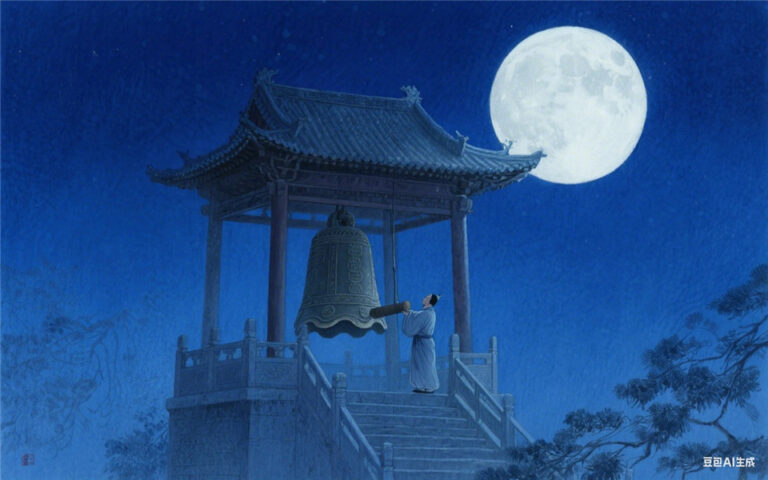
Dajing Temple’s origins are inextricably linked to Shanghai’s city walls. Its original site was an arrow tower on the city wall’s northwest section, initially serving military defense functions. During the Wanli reign of the Ming Dynasty (1573–1620), local residents raised funds to build a temple atop the arrow tower, venerating Guan Yu—revered by the populace as the “Warrior Sage.” Thus, Dajing Temple was born. This transformation not only reflected the prevalence of folk beliefs in Ming-era Shanghai but also signified the functional evolution of military structures into cultural spaces.
Subsequently, Dajing Temple underwent multiple renovations and expansions: In the seventh year of the Chongzhen reign (1634), the temple underwent its first major reconstruction, gradually taking shape; In the twentieth year of the Jiaqing reign (1815) during the Qing Dynasty, the completion of a three-story pavilion enhanced the temple’s grandeur, making it one of the highest points in the old city district at the time; In the sixth year of the Daoguang reign (1826), Tao Shu, then Governor-General of Liangjiang, inscribed the plaque “Kuang Guan” (Vast View), endowing the temple with the poetic connotation of ascending heights to survey the distance and broaden one’s horizons; A decade later, in the sixteenth year of Daoguang (1836), a stone archway was added to the east side. Governor Chen Luan inscribed the plaque “Magnificent Scenic Wonderland,” further highlighting its scenic beauty and cultural depth. Over a century of repeated destruction and reconstruction not only sustained the temple’s existence but also made it a microcosm of Shanghai’s social landscape across different eras.
II. Natural Scenery: The Poetic Charm of “Snow-Cleared Riverside” in Shanghai
During the Qing Dynasty, Dajing Temple served not only as a religious site but also as a renowned scenic spot in Shanghai. The area behind the temple, adorned with pink peach blossoms and green willows, offered distinct seasonal vistas: in spring, peach blossoms bloomed and willow buds sprouted, brimming with vitality; in summer, dense shade provided a cool retreat for citizens; autumn brought fallen leaves carpeting the ground, exuding rustic elegance. Yet its most celebrated spectacle was the “Snow on the Riverside After a Clear Day” in deep winter—after heavy snowfalls, the temple and surroundings donned a silver-white mantle. Snow blanketed the gray tiles and red walls, transforming the landscape into a pristine expanse. From afar, it resembled a field of jade, serene and majestic. This uniquely beautiful scene earned its place among the “Eight Scenic Views of Shanghai,” inspiring generations of literati to compose poetry and prose. Their masterful works depicting the snowy landscape have enriched Shanghai’s urban culture with profound poetic charm.
III. Contemporary Value: Historical Legacy Under Cultural Preservation
Despite centuries of vicissitudes and multiple transformations, the historical value and cultural significance of Dajing Temple have never been forgotten. In 1982, it was officially designated as a Shanghai Municipal Cultural Heritage Site. This recognition not only affirmed its historical status but also ushered in a new phase of scientific conservation and rational utilization. Today, the restored Dajing Temple preserves traditional architectural forms and features—such as its rustic plaques, stone archways, and original structural elements—while thoughtfully curated exhibits narrate its historical ties to Shanghai’s old city quarters. It stands as a vital site for understanding Shanghai’s ancient architecture, folk beliefs, and urban evolution.
From its origins as a Ming Dynasty archery platform temple, to its inclusion among the “Eight Scenic Views of Hu City” during the Qing Dynasty, and now as a municipal-level cultural heritage site, every chapter of Dajing Temple’s history is intertwined with Shanghai’s urban development. Like a silent elder, it stands quietly beside Dajing Road, its weathered walls and preserved plaques narrating over four centuries of Shanghai’s vicissitudes and poetic charm, preserving a precious historical memory for contemporary Shanghai.