Chuansha Sanyuan Temple: A Century of Transformation at Shanghai’s Sole Taoist Convent
Nestled in the Yanqiao area of Chuansha New Town, Pudong New District, Shanghai, lies a Taoist temple steeped in a century of history—Chuansha Sanyuan Temple. As Shanghai’s only surviving convent dedicated to female Taoist priests, it has not only witnessed the evolution of local culture but also stands uniquely distinguished among the city’s Taoist sites due to its distinctive religious identity. The temple’s developmental trajectory can be explored through three dimensions: historical origins, architectural layout, and cultural significance.
I.Historical Origins: The Identity Evolution from “Zhou Taige Temple” to Sanyuan Temple
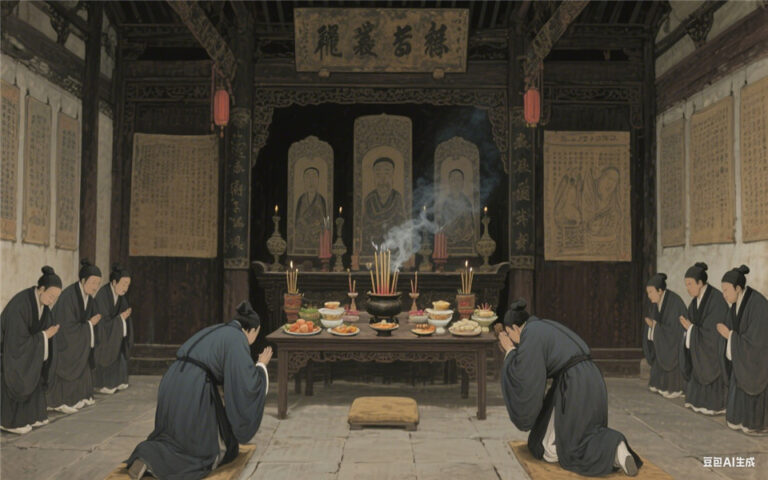
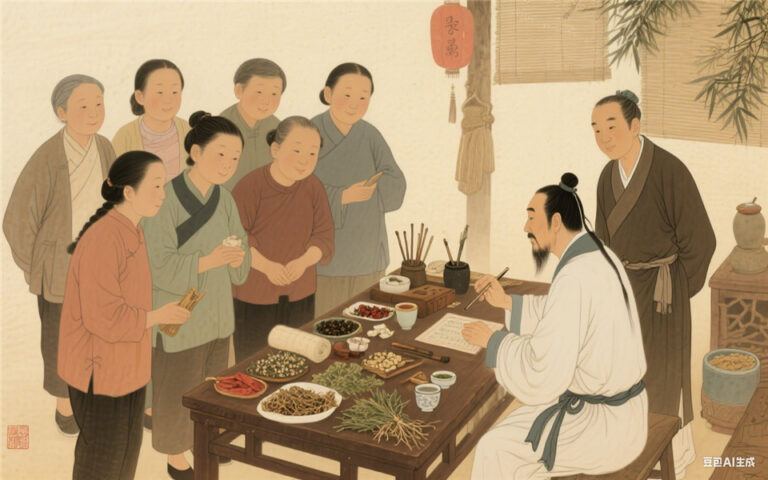
The predecessor of Chuansha Sanyuan Temple was the “Temple of Grand Steward Zhou,” commonly known as “Lord Zhou’s Temple,” established in the sixth year of the Yongzheng reign (1728). Historical records indicate it was originally built to commemorate Zhou Zhongxian, the Qing dynasty magistrate of Songjiang. During his tenure, Zhou Zhongxian earned deep affection from local residents through his efforts in flood control, agricultural promotion, and compassionate governance. After his departure, the people spontaneously raised funds to erect the shrine as an expression of gratitude. At that time, the Zhou Grand Steward Shrine occupied over three mu of land, featuring well-organized halls and thriving incense offerings. It became a vital venue for nearby residents to pray for blessings and discuss community affairs.
From the late Qing Dynasty through the Republican era, social upheaval intensified. The temple complex gradually deteriorated under the ravages of war and time. By the early years of the People’s Republic of China, the original structures had largely vanished. It wasn’t until the late 20th century, with growing awareness of preserving traditional culture, that local authorities and Taoist practitioners jointly initiated the temple’s reconstruction. The newly constructed temple preserves the legacy of commemorating Zhou Zhongxian while introducing the worship of the “Three Sovereigns” (Upper Sovereign of Heaven, Middle Sovereign of Earth, Lower Sovereign of Water). It was formally renamed “Chuansha Three Sovereigns Temple,” expanding its function from a “celebrated figure’s shrine” to a “Daoist temple complex.”
II.Architectural Layout: Fusion of Traditional Form and Modern Needs
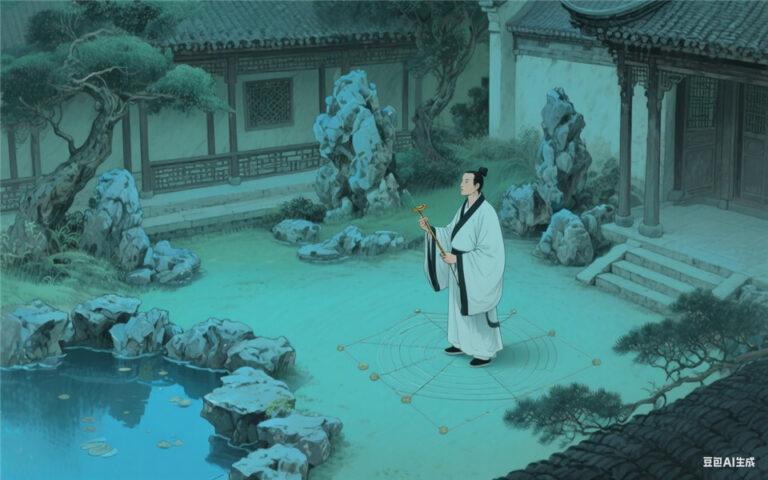
Though newly constructed in recent years, the present Chuan Sha San Yuan Palace strictly adheres to traditional Daoist temple layout while accommodating modern religious activities. Oriented north-south along its central axis, the complex features a mountain gate, main hall, and auxiliary halls, flanked by living quarters, vegetarian halls, guest rooms, and other facilities, totaling approximately 1,200 square meters.
The main hall, the temple’s central structure, features a single-eave hip-and-gable roof with upturned eaves and ornate painted beams, embodying the refined elegance of ancient Jiangnan architecture. At the hall’s center stands the gilded statue of the Three Sovereigns, radiating solemn dignity. To its left remains the statue of Zhou Zhongxuan, dressed in Qing dynasty official attire and exuding scholarly grace, preserving the temple’s historical lineage. The side halls house Daoist scriptures and serve as prayer spaces for devotees, their simple, rustic furnishings fostering a tranquil and reverent religious atmosphere.
Additionally, the temple complex includes over ten auxiliary buildings. These comprise nun quarters, a vegetarian dining hall, and guest rooms for visiting devotees and tourists. These modern facilities not only support the temple’s daily operations but also foster a harmonious coexistence between traditional culture and contemporary life.
III.Cultural Value: A Unique Vehicle for Shanghai’s Female Taoist Culture
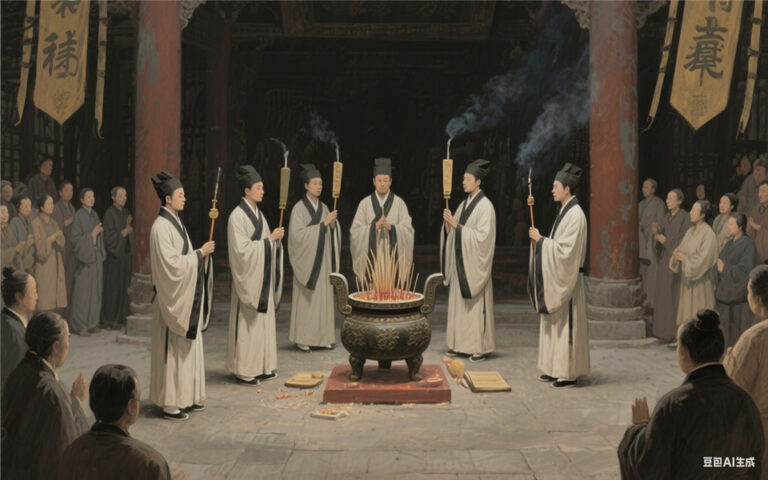
As Shanghai’s sole female Taoist temple, Chuan Sha San Yuan Palace holds distinctive religious and cultural significance. The nuns within adhere to Taoism’s doctrine of “quietude and non-action,” observing daily rituals of morning bells and evening drums while chanting scriptures. They actively engage in local cultural activities, such as hosting Taoist lectures and traditional festival blessings, becoming vital forces in preserving Taoist heritage.
Historically, the temple’s evolution mirrors the integration of folk beliefs and official rituals in Shanghai—from villagers erecting shrines to honor officials, to incorporating deities into the Taoist pantheon, to becoming a modern religious venue. Each transformation reflects the cultural demands of its era. Today, Chuan Sha San Yuan Palace serves not only as a spiritual home for Taoist adherents but also as a vital physical repository for studying Shanghai’s local history, religious culture, and the transmission of Taoism by women, adding a unique dimension to the city’s cultural diversity.
Having weathered nearly three centuries of vicissitudes, Chuan Sha San Yuan Palace may have shed its former appearance, yet it remains steadfastly centered on “gratitude” and “blessing.” Amidst the collision of tradition and modernity, it continues to write its own cultural chapter. This hidden Daoist temple for women, tucked away in an urban corner, shines as a modest yet precious gem within Shanghai’s multicultural landscape, radiating its unique historical depth and cultural charm.