
Donghua Taoist Temple: A Century-Old Echo of Taoist Culture by the Rainbow Bridge
Deep within the bustling streets of Hongqiao South Bai Zha in Shanghai County once stood the Donghua Daoist Temple, a structure that embodied a century of Daoist tradition. Though this Daoist architectural relic has long since vanished into the annals of time, its faint traces in local historical records offer a glimpse into the religious and social transformations of Shanghai from the Qing Dynasty to the early Republic of China era.
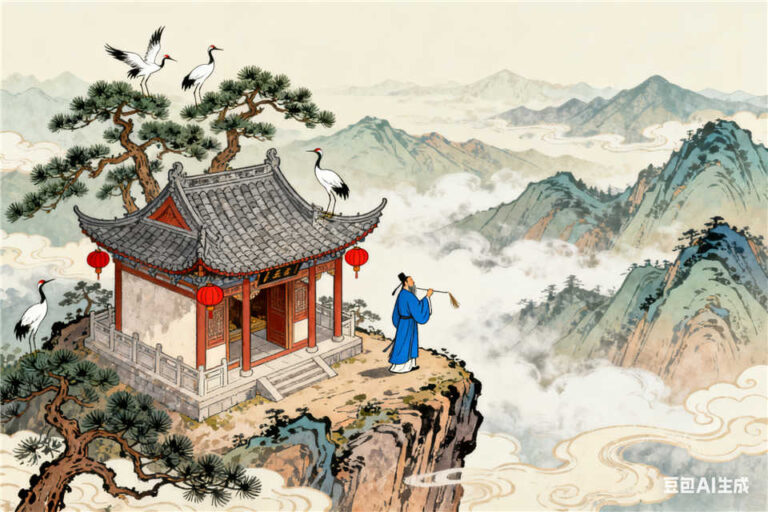
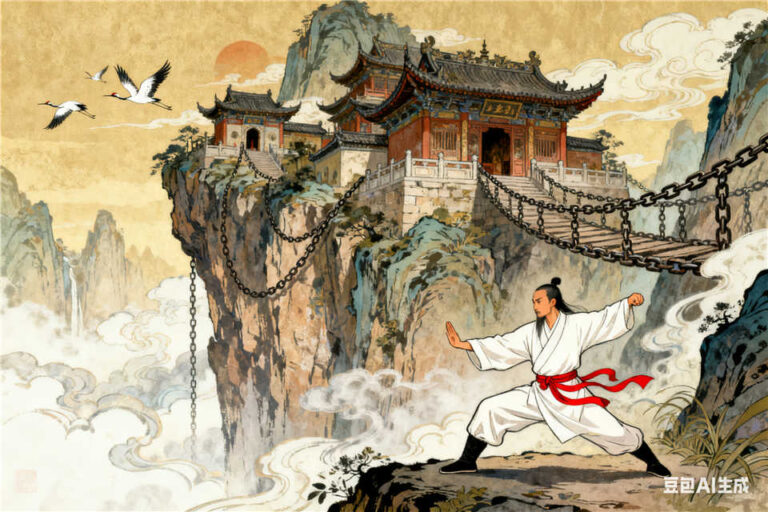
During the Kangxi era, as the literary and commercial cultures of Jiangnan gradually intertwined along the Huangpu River, Xu Benxu, a native of Zhejiang, crossed the Qiantang River and established the initial framework of the Donghua Daoist Temple south of Hongqiao. At that time, Shanghai had not yet become the bustling metropolis it is today, and the area around Hongqiao was still a rural landscape of fields and villages. This newly built Taoist temple provided spiritual solace to the local people amidst the morning bells and evening drums.
The blue-tiled walls stood silently in the misty rain of Jiangnan, and the incense burning before the statues of the Three Pure Ones reflected the devout faces of the believers, bearing witness to Xu Benshu’s original intention of spreading Taoism in Shanghai as a stranger in a foreign land.
The renovation in the fourth year of the Qianlong reign infused the Taoist temple with new vitality. After meticulous repairs by craftsmen, the halls became even more majestic, with the auspicious beasts on the eaves shimmering in the sunlight. At this point, the Donghua Taoist Temple was no longer merely a place for religious activities but had become a hub for local cultural gatherings. Scholars and literati often lingered here, discussing Taoist philosophy amidst the aromatic tea and Taoist music, adding a touch of literary elegance to the building. The existence of the Daoist temple is like a seal on the banks of the Hongqiao River, imprinting a unique Daoist mark on the cultural scroll of Jiangnan.
During the Daoguang era, the reconstruction of the western wing marked the final establishment of the temple’s layout. The brick-and-wood structure of the pavilion was reborn after years of erosion, and the light filtering through the carved window frames quietly permeated the daily life with the Daoist concept of “unity between heaven and humanity.” At that time, Shanghai County was experiencing a boom in commerce, yet the Daoist temple remained serene and detached from the world. The sight of Daoist monks practicing in the morning and villagers coming to pray formed a harmonious rural scene.
In the 31st year of the Guangxu reign, the relocation of the Tongren Yixue Academy brought a new mission to this ancient building. The sound of students reciting texts replaced the chanting of sutras, and the courtyard’s blue-tiled roofs began to echo with the new ideology of “learning from the barbarians to control the barbarians.” This transformation was akin to a metaphor for late Qing China—traditional and modern elements colliding yet seeking coexistence. The conversion of the building for other uses in the third year of the Xuantong era foreshadowed the end of its historical journey.
Today, the Donghua Taoist Temple has been swallowed up by the tide of urban development, with only a few lines in local annals still recounting its former existence. Its rise and fall mirror the development of Shanghai—constantly writing new chapters in the intertwining of tradition and modernity. Those fleeting traces of Daoist charm scattered across time may still be hidden within the bricks and tiles of the Hongqiao area, waiting to be rediscovered.