Exploring the Mysterious Past of Qingpu Yuqing Taoist Temple
In the long history and culture of Shanghai, Taoist architecture is dotted like stars, and the Qingpu Yuqing Taoist Temple is a star that once emitted a unique light. Although it has now become a memory of history, the stories of the past are still worth exploring.
1、Geographical location and origin of common name
Qingpu Yuqing Taoist Temple is located outside the north gate of Shanghai County, Shanghai. It is commonly known as the “Two Heavenly Gates” among the people, and further north, there is also the corresponding “Three Heavenly Gates”. This unique nickname may imply its special position in the Taoist belief system, as if connecting the second gateway between the human world and the fairyland, arousing people’s imagination.
2、Mysterious era of creation
The founding year of Yuqing Taoist Temple seems to be covered by a mysterious veil, and it is still unknown. In the long scroll of history, we do not know when it rose from the ground and became a place for people to place their faith. However, the line “Xiaobo Ancient Immortal Temple” in the poem “Seeking Chrysanthemums” by King Yuan of the Qing Dynasty provides us with a clue, allowing us to confirm that this Taoist temple already existed in the Qing Dynasty and attracted literati with its ancient style and strong immortal charm.
3、Architectural pattern and style
Due to previous abandonment and subsequent reconstruction and restoration, the architectural layout may have undergone some changes compared to its initial state. Although it is currently abandoned, based on past records and the common characteristics of Taoist architecture, it is inferred that it should have had a rigorous layout. Generally speaking, there will be a mountain gate as the starting point of the Taoist temple, symbolizing the transition from the mortal world to the fairyland. The temple is the core building that enshrines Taoist deities and is a holy place for believers to worship and pray for blessings.
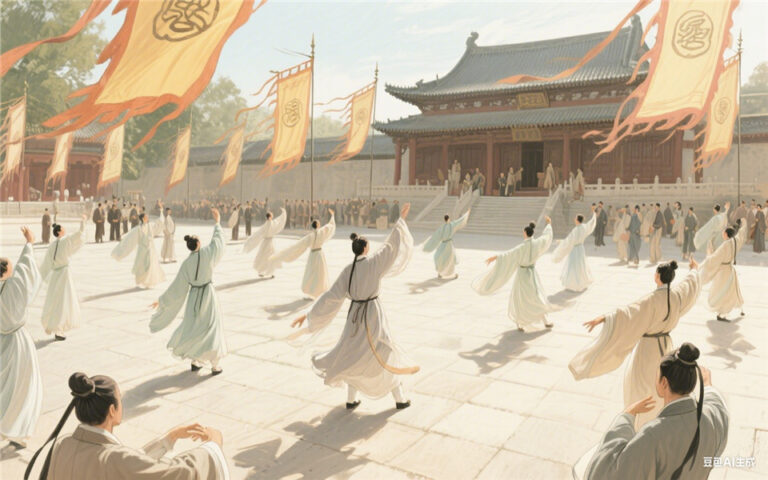
Perhaps there will also be side halls used to worship other deities or as auxiliary spaces for religious activities. Its architectural style has typical characteristics of Jiangnan Taoist architecture, with upturned eaves and corners resembling a crane spreading its wings and ready to fly, agile and graceful; Carved beams and painted rafters, with its exquisite patterns and exquisite craftsmanship, shows the broad and profound Taoist culture. These decorations not only have aesthetic value, but also contain rich religious meanings, complementing the surrounding natural landscape and creating a sacred atmosphere of harmony between man and nature.
4、The vanished glory
Unfortunately, the Yuqing Taoist Temple, which carries history and faith, ultimately fell into disrepair. It can be seen from relevant records that in the 53rd year of Qianlong’s reign (1788), Sun Fengming, the Supervisor of the County County, donated money to the Dai people to persuade them to repair it in an attempt to revitalize it. However, the relentless changes of time still failed to keep it alive. Its abandonment may be related to various factors such as social change, war and turmoil, and economic development. Although it has disappeared, it has left an indelible mark in the history of Qingpu and has become an important specimen for people to trace back and study the development of Taoist culture in the Shanghai area.