
From a Taoist Perspective: Are Theists Really “Pretending” or “Deceiving”?
“Do theists truly exist? How could rational people believe in ‘gods’? Are they pretending out of fear, or deliberately lying?” Such questions often stem from a narrow understanding of “god.” Approaching the matter through Chinese Taoist thought reveals that “belief in gods” conceals a reverence for the laws of the universe and an exploration of life’s essence—not mere ‘pretending’ or “deception.”
I. Taoist “Deities”: Not Personified “Supernatural Rulers”
Many perceive “deities” as supernatural beings capable of controlling everything, yet Taoist “deities” are entirely different. In Taoism, ‘deities’ are more like the embodied manifestations of the “Tao,” symbols of natural laws and vital energy. The Tao Te Ching states, “The Tao gives birth to One, One gives birth to Two, Two gives birth to Three, Three gives birth to all things.” Taoist ‘gods’ are manifestations of the Tao in different realms. For instance, the “Three Pure Ones” represent different forms of the Tao; “mountain gods” and “river gods” embody reverence for the natural forces of mountains and rivers; and the “kitchen god” carries hopes for domestic harmony and smooth household affairs.
Daoist adherents honor deities not to seek arbitrary blessings, but to acknowledge the principles they embody. Just as farmers worship the Earth God to honor the land’s life-giving power and remind themselves to follow agricultural rhythms, devotees venerate the Supreme Old Lord to honor the wisdom of “following nature’s way,” aspiring to live in harmony with universal laws. This faith in “deities” fundamentally reflects reverence for natural and life’s inherent laws, bearing no relation to ‘superstition’ or “going through the motions.”
II. The Core of Believing in “Deities”: Reverence for Life and Natural Laws, Not “Fear”
Some perceive theistic believers as worshiping “gods” out of fear of the unknown. Yet in Daoist thought, the core of belief in “gods” is “reverence,” not “fear.” Daoism emphasizes “the unity of heaven and humanity,” viewing humans as part of nature and ‘gods’ as embodiments of natural laws. Revering “gods” thus signifies revering one’s own connection to nature.
For instance, Taoists perform ritual offerings not out of fear of divine punishment, but to remind themselves to restrain their actions, avoid harming nature, and remain true to their authentic selves. Similarly, ordinary people visit temples to pray for blessings not because they fear divine retribution, but to use this practice to organize their inner thoughts and strengthen their commitment to kindness and harmony. Daoism rejects the logic of “punishment for disbelief,” instead valuing the active choice to “practice virtue and accumulate merit.” This faith embodies proactive self-discipline, not a “pretense” born of fear.
III. Reason and Faith: The “Non-Blindness” in Daoist Thought
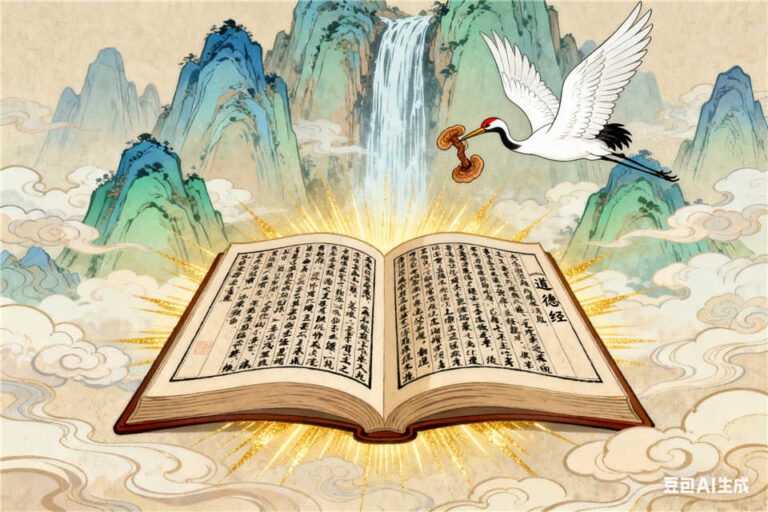
Some may view “believing in deities” as irrational, yet Daoism has always opposed blind worship. The Tao Te Ching states, “The Tao that can be spoken of is not the eternal Tao,” cautioning against rigidly fixed notions of the Tao (including the laws embodied by ‘gods’). The Taoist classic Taiping Jing also emphasizes that “to study the Tao, one must understand the principles of affairs,” requiring believers to comprehend nature and human relationships while honoring the divine.
True Taoist adherents do not blindly believe “gods” can solve everything. Instead, they act in accordance with the principles of the Tao. For instance, they believe “Heaven rewards diligence,” so while honoring “gods,” they also work hard and live conscientiously. When facing difficulties, they reflect on whether they have violated natural laws rather than solely seeking divine intervention. This faith complements reason—using reverence for natural laws to guide clearer living, rather than abandoning rationality through “lying” or “pretense.”
In truth, whether in Taoism or other faiths respecting natural order, “belief in deities” transcends a simple “theistic” label. It functions more as a spiritual anchor: reminding us in a complex world to revere nature, restrain ourselves, and maintain our pursuit of goodness. Such faith has nothing to do with “pretending” or “lying”; it is the equilibrium between reason and the soul. After all, true rationality never denies all faith, but rather understands how to find within faith the strength to guide our lives.