Pingluo Jade Emperor Pavilion: A Millennium of Taoist Elegance on the Frontier
On the fertile lands north of Pingluo County in Ningxia, the Pingluo Jade Emperor Pavilion stands like a silent elder, having stood the test of time for a thousand years. This largest existing Taoist architectural complex in Ningxia is not merely a masterpiece of brick and stone craftsmanship; it is a living fossil where Taoist culture and regional wisdom intertwine on the vast northwest plains.
Tracing its origins, the history of the Jade Emperor Pavilion holds the mysteries of time.
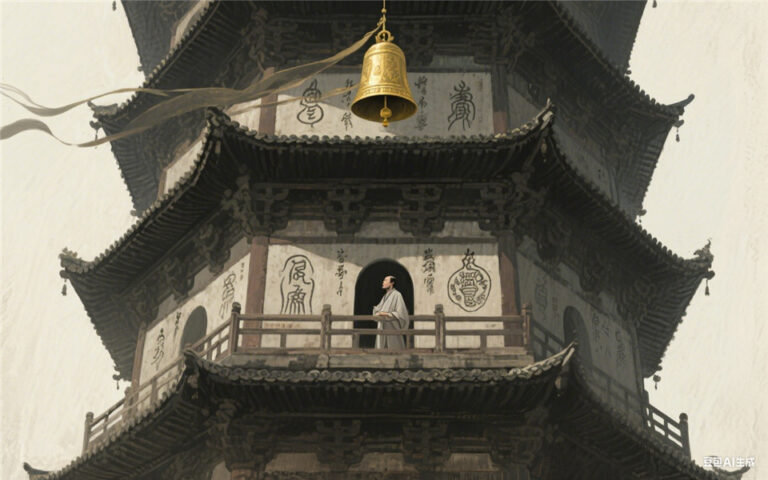
Though its exact founding date has been lost to the sands of time, it originally began as a small White Dragon Temple, housing the dragon deity revered by the local people. As Daoist culture spread across the northwest, this humble temple underwent a metamorphosis, expanding through generations of renovations to reach its current scale. The old Yu Huang Pavilion stands at the center of the courtyard, its nine-ridge gabled roof resembling a bird spreading its wings, while the two-story buildings shimmer with an ancient bronze luster under the sunlight. The layered brackets resemble frozen musical notes, echoing the lingering melody of Tang Dynasty architecture; the New Jade Emperor Pavilion, however, interprets craftsmanship with a more bold stance—two parallel three-story pavilions with ten-sided gabled roofs resembling blooming lotus flowers, breaking away from traditional symmetrical layouts and standing out uniquely in Northwest architecture.
Strolling through the courtyard, the narrative quality of the architecture is captivating. The carved window frames of the Old Jade Emperor Pavilion hide the mystical “Ba Gua Nafu” symbolism; the glazed tiles on the eaves of the New Jade Emperor Pavilion remain vibrant despite the wind and sand, with each tile engraved with Taoist talismans, continuing to safeguard the peace of the area after a century. The two side halls and the bell and drum towers are symmetrically arranged, forming a “stars surrounding the moon” layout. This design adheres to the Daoist principle of “unity between heaven and humanity” while incorporating the practical style of Northwest residential architecture. The ancient cast-iron bell in the bell tower, when struck, echoes for miles, as if piercing through time and space to harmonize with the morning bells and evening drums of the White Dragon Temple from a thousand years ago.
As a provincial-level cultural relic protection unit, the value of the Jade Emperor Pavilion extends far beyond its architectural significance. It stands as a testament to the flourishing of Daoism in the Huanghe River Basin during the Ming and Qing dynasties, and serves as a microcosm of the fusion of multiple ethnic cultures. The faint engravings on the wall bricks may be the graffiti of border-defending soldiers; the remnants of colored paintings between the beams and brackets still hint at the collision of Central Plains techniques and Western Region colors. During Daoist festivals, the pavilion is filled with incense smoke, and the sounds of chanting intertwine with the distant bells of camels, composing a unique melody of the northern frontier.
Today, the Pingluo Jade Emperor Pavilion still stands tall in the northern winds, its weathered yet majestic form narrating the past and future of the Ningxia Plain. It is not merely a structure but a three-dimensional historical text, awaiting interpretation of its Daoist essence and nostalgia.