Qingpu Chenghuang Temple: the memory of ancient buildings in Shanghai that have passed through 600 years
In the east and north corner of Qingpu County, Shanghai, an ancient building, Qingpu Chenghuang Temple, which bears the memory of 600 years of history, stood quietly. It is not only an important religious and cultural landmark in the Ming and Qing dynasties, but also witnesses the changes of time in the Qingpu area. Its rise and fall can be regarded as a precious microcosm in the history of ancient architecture in Shanghai.
1.Historical evolution: The century long restoration of the Three Dynasties
The construction and repair of Qingpu Chenghuang Temple ran through several important periods of the Ming and Qing dynasties. According to historical records, the temple was originally built in the sixth year of the Wanli reign of the Ming Dynasty (1573), providing an important place for local people to pray for blessings and prevent disasters. With the passage of time, the temple underwent its first renovation in the eleventh year of Chongzhen (1638), and its scale and regulations were further improved; Only six years later, in the seventeenth year of Chongzhen (1644), a large-scale renovation was carried out. At this time, the Chenghuang Temple had begun to take on a magnificent look.
In the Qing Dynasty, the renovation of Chenghuang Temple never stopped. In the tenth year of Qianlong’s reign (1745), Qiao Shizu, the Supervisor of the County County, took the lead in raising money and built a “Spirit Garden” on the left side of the temple, adding a garden scene to the Chenghuang Temple; In the 52nd year of Qianlong’s reign (1787), Sun Fengming, the Supervisor of the County County, continued the cause of his predecessors and renovated the temple and the spiritual garden again, making this ancient building complex reach its peak in history. The relay construction of several generations has made Qingpu Chenghuang Temple a comprehensive building group integrating religious sacrifice and garden appreciation.
2.Architectural Layout: Unique Regulations of Temple Garden Dependence
Different from the single sacrificial function of the traditional Chenghuang Temple, the most prominent feature of Qingpu Chenghuang Temple is the organic combination of “temple” and “garden”. The main temple follows the typical layout of Taoist temples in the Ming and Qing dynasties. Along the central axis, the buildings such as the gate, the main hall, and the back hall are arranged in order. The cornices and carved beams and painted rafters show the solemnity and refinement of Chinese ancient buildings.
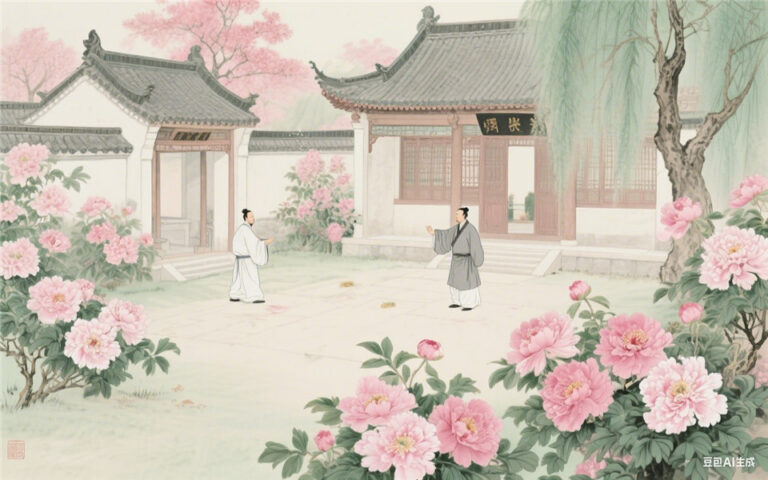
The spiritual garden on the left is a different scenery. According to records, the park is surrounded by buildings and terraces, with clear water and trees, winding paths, fragrant flowers and green grass, and a spring like atmosphere at all times. The tower is built by the water, reflecting on the clear water surface; The winding path weaves through the flowers and plants, offering different scenery throughout the four seasons. This layout of “front temple and back garden” not only meets the functional needs of religious worship, but also provides a place for the public to relax and enjoy, reflecting the architectural concept of “unity of heaven and man” in the Ming and Qing dynasties.
3.Cultural Value: An Important Carrier of Local Memory
Qingpu Chenghuang Temple is not only an ancient building, but also an important carrier of local culture and memory. During the Ming and Qing dynasties, it was not only a place for people to pray for blessings and worship the City God, but also an important link for local officials to communicate with the people. During important festivals or major events, local officials would hold worship ceremonies here, praying for good weather and peace of the country and the people.
At the same time, the existence of the spiritual garden also makes Chenghuang Temple a gathering place for literati and scholars. They enjoyed the scenery, wrote poetry, and painted here, leaving behind many literary works related to Qingpu, making important contributions to the inheritance and development of local culture. Although the Chenghuang Temple in Qingpu has been “abandoned”, its historical memory and cultural value are still valuable cultural heritage in Qingpu.
Looking back at the 600 year history of Qingpu Chenghuang Temple, from the early construction of the Ming Dynasty to the multiple repairs of the Qing Dynasty, from the religious sites with flourishing incense to the cultural space where scholars gathered, it witnessed the historical changes in Qingpu, and also condensed the feelings and memories of generations. Although this ancient building no longer exists, the architectural wisdom and cultural spirit it represents are still worth cherishing and inheriting.