Qiyun Mountain Yuxu Palace: A Taoist Sanctuary Beneath Zixiao Cliff
Nestled among the peaks 15 kilometers west of Xiuning County in Anhui Province, Qiyun Mountain unfolds like a brushstroke landscape painting, and the Yuxu Palace beneath Zixiao Cliff is the most profound stroke in this masterpiece. This Ming Dynasty Daoist temple, steeped in centuries of incense and history, appears even more ancient and mysterious against the backdrop of the Danxia landform.
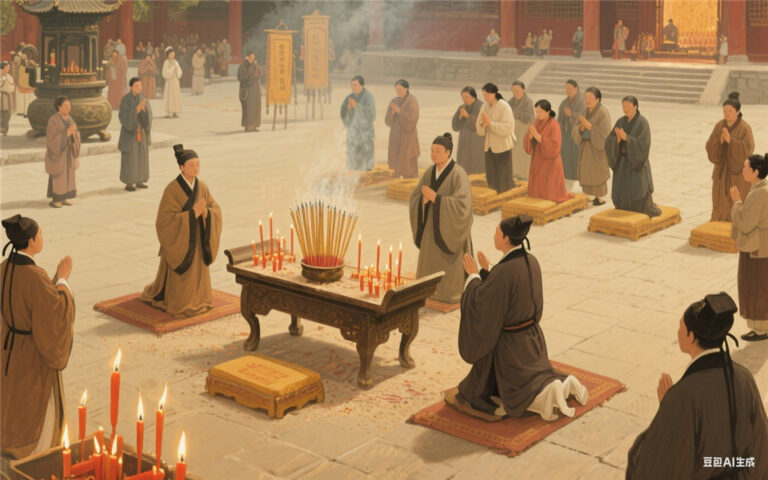
In the 10th year of the Zhengde reign (1515), Daoist monk Wang Taiyuan founded the temple here, imbuing the bricks, stones, and plants with the insights gained from a lifetime of spiritual practice. From its inception, the Yuxu Palace has venerated the True Martial Emperor as its principal deity. This Taoist deity, symbolizing the Northern Black Tortoise and overseeing floods and auspiciousness, has established the palace’s solemn and sacred tone. During Taoist festivals, the smoke of incense swirls as the chanting of monks resonates with the mountain winds, as if echoing the prayers from the depths of history.
The four-pillar, three-story pavilion-style stone archway in front of the palace is a masterpiece of Ming Dynasty stone carving art. Standing 17 meters tall, it stands out prominently among the surrounding peaks. Carved entirely from red sandstone, it has weathered five centuries of wind and rain, with the sandstone’s texture growing increasingly smooth and lustrous over time. The relief patterns on the archway hold hidden meanings: swirling cloud patterns intertwine with Taoist talismans, while cranes and qilin traverse the clouds. Every chisel mark reflects the craftsmen’s devotion. Standing beneath the stone archway and looking up, the three-story pavilion narrows with each level, its eaves and corners curving upward like bird wings ready to spread, embodying both the grandeur of imperial regulations and the ethereal beauty of a mountain Taoist temple.
On the left side of the palace, a ancient stele stands quietly between the stone walls. This is the “Zixiao Palace Xuan Di Stele Inscription” written by the Ming Dynasty painter Tang Yin. This renowned scholar from Jiangnan, known for his literary talent and charm, left behind his vigorous and powerful calligraphy here. The inscription not only details the divine deeds of the True Martial Emperor but also incorporates Tang Yin’s unique insights into Daoist culture, blending the carefree spirit of a scholar with the solemnity of religion. Touching the weathered engravings on the stele, one can almost feel the composure and unconventionality of Tang Yin as he wielded his brush over four centuries ago.
Though the Jade Void Palace no longer boasts its former splendor, it has gained a serene tranquility through the passage of time. In the morning mist, the palace’s eaves appear and disappear among the Danxia peaks; at dusk, the silhouettes of the stone arches intertwine with the afterglow of the setting sun. Every brick, stone, stele, and arch here narrates the thousand-year-old legend of Qiyun Mountain as a renowned Daoist mountain, and awaits every visitor to listen to this ancient tale hidden beneath the Purple Mist Cliff.