Shanghai Baiyun Temple: A Cultural Landmark of Quanzhen Taoism in Shanghai
Nestled on Xilin Hou Road in Shanghai stands a sacred site steeped in centuries of Taoist heritage—Shanghai Baiyun Temple, also known as “Baiyun Temple by the Sea.” It is not only Shanghai’s oldest Quanzhen Taoist temple but also the core venue for the preservation and advancement of Taoist culture in contemporary Shanghai. Its century-long evolution, alongside its architecture and cultural relics, collectively form a distinctive Taoist cultural landscape.
1.Historical Development: From Founding Halls to Monastic Community
The origins of Shanghai Baiyun Temple trace back to the Guangxu era of the Qing Dynasty, spearheaded by Quanzhen Daoist Xu Zhicheng. In the eighth year of Guangxu (1887), with funding from philanthropists and merchants of the Renji Charity Hall, Xu Zhicheng initiated the construction of the Hall of the Thunder Deity, laying the temple’s foundational stones. By the twelfth year of Guangxu (1886), he expanded the complex, adding the Hall of Doumu, the Guest Hall, and the Vegetarian Dining Hall, establishing the temple’s initial scale. In the 19th year of Guangxu (1893), with funding from figures like Chen Runfu, President of the Shanghai Chamber of Commerce, the Sanqing Hall, Lü Zu Hall, and Qiu Zu Hall were successively completed. By this time, the temple occupied over fourteen mu of land, becoming a Quanzhen Daoist temple of considerable scale.
More crucially, in the 14th year of the Guangxu reign (1888), the abbot Xu Zhicheng traveled to Beijing. With the assistance of Abbot Gao Rendong of Beijing’s Baiyun Temple and Qing court officials, he formally renamed the temple “Shanghai Baiyun Temple.” He also obtained a precious Ming Dynasty edition of the Daozang (Taoist Canon), enshrining it in the Sutra Hall to “guard the temple gates.” Simultaneously, the temple adopted the refined rules and precepts of Beijing’s Baiyun Temple, establishing its status as a significant Quanzhen monastery open to all. Through over a decade of Xu Zhicheng’s dedicated efforts, Shanghai’s Baiyun Temple gradually became a highly respected Quanzhen temple in Shanghai, cementing its position within the city’s Taoist community.
2.Architectural Layout: Symmetrical Arrangement of Front and Rear Halls
Shanghai Baiyun Temple follows the traditional Taoist palace layout, divided into front and rear sections with a symmetrical structure and distinct functions.
The front hall area centers on core halls and auxiliary structures: Along the central axis stand the Hall of the Thunder Ancestor and the Sutra Library. The former served as an early landmark of the temple, while the latter holds exceptional significance for housing the precious Ming Dynasty edition of the Daozang. The eastern hall houses the Guest Hall and the Hall of Master Qiu. The Guest Hall accommodates visitors and meetings, while the Hall of Master Qiu venerates Qiu Chuji, a pivotal figure in the Quanzhen School. The western halls include the Monastic Dining Hall and Doumu Hall. The Monastic Dining Hall served as the daily dining area for Taoist priests, while Doumu Hall enshrined the Goddess Doumu Yuanjun, reflecting the diverse belief system within Taoism.
The rear hall area adopts a three-courtyard layout, forming the core ritual zone of the temple: The Three Purities Hall on the central axis serves as the main structure of the rear hall, enshrining the Three Purities, the supreme deities of Taoism; To the south lies the Jiazi Hall, and to the north is the Four Imperial Guardians Hall, corresponding to the Jiazi Deities and the Four Imperial Guardians in Taoism. The east side features the Hall of Relief from Suffering, while the west houses the Hall of Master Lü, the Jade Emperor Pavilion, and the Bell and Drum Tower. The daily morning bells and evening drums from the tower mark the Taoist rhythms of dawn and dusk. The overall layout adheres to Taoist ritual protocols while maintaining practical functionality.
3.Cultural Value: Treasures of Qing Dynasty Bronze Casting and Ming Edition Daozang
Shanghai Baiyun Temple houses numerous precious Taoist artifacts, most notably the bronze deity statues in the Three Pure Ones Hall and the Ming edition Daozang. The statues of Zhang Tianshi, Xu Tianshi, and the five celestial generals enshrined within the Three Pure Ones Hall were all cast during the Qing Dynasty, each standing 177 centimeters tall. These statues exhibit dignified postures, benevolent countenances, and meticulously rendered drapery details, showcasing superb casting craftsmanship. They not only demonstrate the Qing Dynasty’s advanced metal casting techniques but also embody the cultural significance of Taoist iconography, serving as vital physical evidence for studying Qing Dynasty Taoist art.
The Ming Dynasty edition of the Daozang, acquired in the 14th year of the Guangxu reign (1888), is an especially treasured item among Taoist scriptures. The Daozang is a comprehensive collection of Taoist scriptures. Having endured centuries of transmission, the Ming edition holds immense documentary value, providing crucial reference for Taoist research and scriptural preservation at the temple. Its designation as a “treasure guarding the temple gate” underscores its central role in the temple’s cultural heritage.
4.Present Function: Core Center for Taoist Activities in Shanghai
Today, Shanghai Baiyun Temple transcends its role as a historical site, serving as a vital hub for the preservation and advancement of Taoism in Shanghai. As the headquarters of the Shanghai Taoist Association, it functions as the center for Taoist scholarship, religious activities, talent cultivation, and external relations.
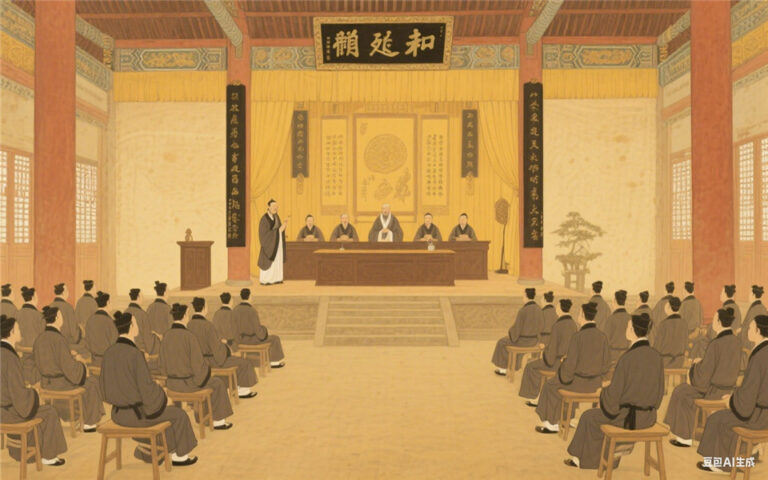
In Taoist research, scholars and Taoist priests conduct in-depth studies on Taoist history, doctrine, and culture, leveraging the temple’s collection of the Daozang and historical archives. For religious activities, the temple regularly holds Taoist rituals and ceremonies, preserving traditional rites; for talent cultivation, it organizes training programs and lectures to nurture the next generation of Taoist practitioners in Shanghai; and for external relations, it serves as a window showcasing Shanghai’s Taoist culture, fostering exchanges and cooperation with Taoist and cultural communities both domestically and internationally.
From its founding a century ago to its present-day cultural stewardship, Shanghai Baiyun Temple remains a vital repository of Quanzhen Daoist culture in Shanghai.