Shanghai Doutian Temple: The Rise and Fall of a Sacred Sanctuary for Northern Jiangsu Immigrants
Amid the historical fabric of Zhongxing Road in Shanghai’s Zhabei District once stood a unique temple—Doutian Temple—which served as a spiritual anchor for immigrants hailing from northern Jiangsu. Though gradually lost to the passage of time, its journey from establishment to decline reflects not only the life cycle of a temple but also the religious culture and social transformations of Shanghai’s immigrant communities during a specific historical period, holding undeniable historical significance.
1. The Temple’s Founding: Faith Takes Root with Support from Northern Jiangsu Immigrants
In 1919, the Doutian Temple was formally established on Zhongxing Road in Zhabei, Shanghai. This event was driven by distinct regional religious motivations and social forces. At that time, Wang Xinde, a Quanzhen Daoist priest from northern Jiangsu, harbored a desire to spread his hometown’s faith to Shanghai. With the strong support of the Yangzhou Public Association, he raised funds that ultimately facilitated the temple’s construction.
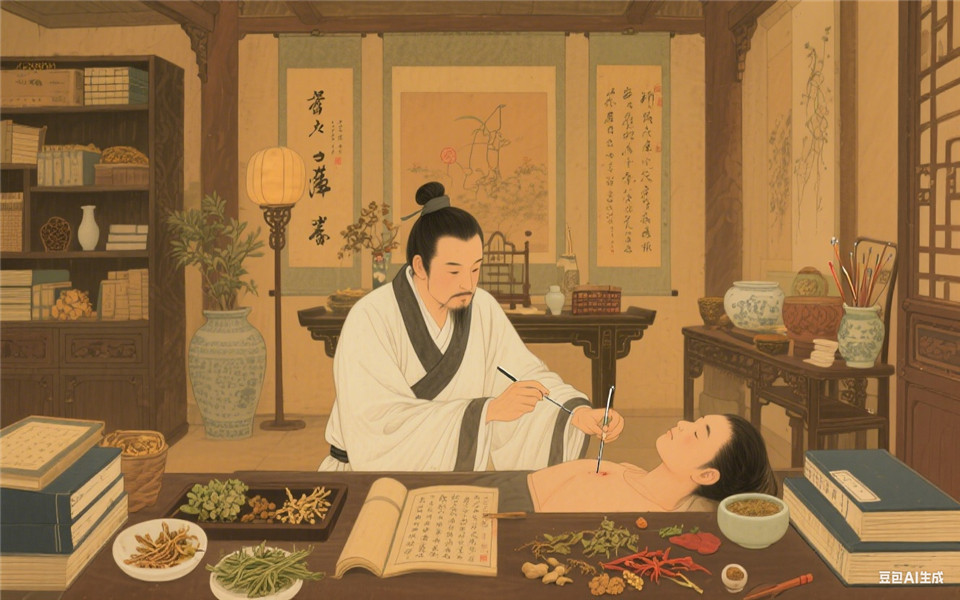
The core faith of this temple was clearly defined, specifically venerating the “Great Emperor of Heaven,” widely worshiped by the people of northern Jiangsu. The “Great Emperor of Heaven” held a significant position in the folk belief system of Northern Jiangsu, revered as a deity safeguarding local peace and blessing the lives of the people. The spread of this belief accompanied the migration of Northern Jiangsu immigrants to Shanghai. After the temple’s completion, Wang Xinde assumed the role of abbot, establishing a religious activity model centered on dispensing medicine for healing and performing Buddhist rituals. Medicine distribution addressed the urgent need for basic healthcare among the lower classes, while religious rituals provided spiritual solace and ceremonial services. These dual functions swiftly established the temple as a spiritual anchor for the surrounding community of northern Jiangsu immigrants in Shanghai.
2. Expansion and Development: The First Major Enlargement
As Doutian Temple’s influence gradually expanded across the Zhabei district, its original scale could no longer meet the growing demands of worshippers and religious activities. In 1931, the temple seized a significant development opportunity—the reconstruction of the main hall and the expansion of other halls.
This expansion was not merely a physical enlargement but a systematic upgrade of the temple’s functionality and layout. The renovated main hall became more majestic, enhancing both the temple’s religious solemnity and its appeal to worshippers. The newly added halls further enriched the temple’s functions, enabling it to better accommodate various activities such as sutra recitations, penance rituals, and congregational gatherings. The expanded Doutian Temple achieved significant improvements both in its architectural grandeur and practical utility. It became one of the most influential folk religious sites in the Zhabei area at the time, further cementing its central role in the spiritual lives of the northern Jiangsu community.
3. War’s Turmoil: Destruction and the Hardships of Temporary Survival
The outbreak of the War of Resistance against Japan dealt a devastating blow to Doutian Temple. Under the ravages of war, the entire temple complex was destroyed. This sanctuary, which had carried the faith of countless devotees, was instantly reduced to ruins, shattering the spiritual anchor for the people of northern Jiangsu in this place.
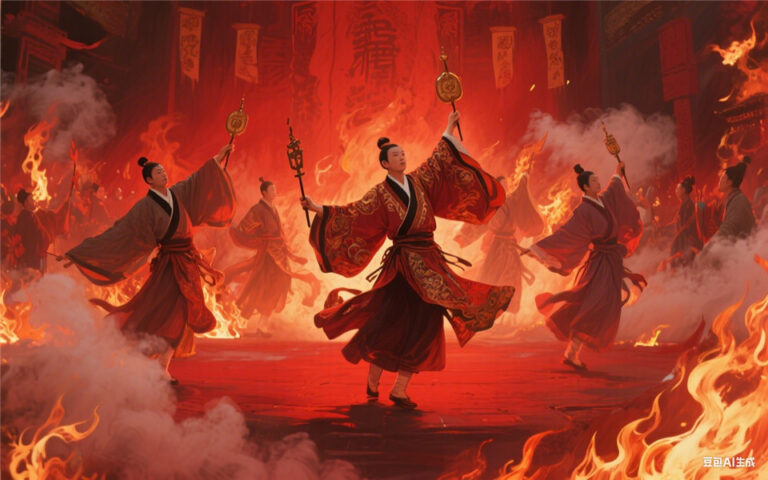
Faced with this devastation, the abbot Wang Xinde refused to abandon hope. With support from secret societies, he established a temporary site for Doutian Temple within the relatively secure concession area. Though vastly smaller and more rudimentary than the original temple, this makeshift sanctuary preserved a glimmer of faith for the devotees. Amid the turbulent war years, this temporary sanctuary not only continued providing basic religious services like dispensing medicine and conducting sutra recitations but also became a vital gathering place for people from northern Jiangsu to find solace and unite their strength in chaotic times. It bore witness to the tenacious survival of folk faith amidst the harsh realities of that extraordinary historical period.
4. Postwar Reconstruction and Final Demise: The Fall of a Sanctuary of Faith
Following the victory in the War of Resistance Against Japan, as the situation gradually stabilized, reclaiming the original site of the Dutiangong Temple became the shared aspiration of Wang Xinde and the faithful. Through concerted efforts, the original site was recovered, and Wang Xinde immediately oversaw the temple’s reconstruction. This rebuilding served both to mend the scars of war and to uphold the continuity of faith. Though the restored Dutiantian Temple strove to recapture its former grandeur, the ravages of war and the turbulence of time made it impossible to fully replicate its past splendor.
After completion, Wang Xinde returned to the old temple to resume his religious duties, and Doutian Temple briefly resumed its religious activities. However, with the changing times, the social environment and the faith needs of the people underwent tremendous changes. The temple’s influence gradually waned, and the temple buildings, lacking maintenance, gradually fell into disrepair. Ultimately, this temple, which had witnessed cycles of prosperity and decline, could not escape the tide of history. It gradually fell into ruin and withdrew from Shanghai’s religious and social stage, leaving only scattered traces of its existence in historical records and the memories of the older generation.
The life of Shanghai’s Doutian Temple is inextricably linked to the survival journey of immigrants from northern Jiangsu Province in Shanghai and to the historical transformations of modern Shanghai.