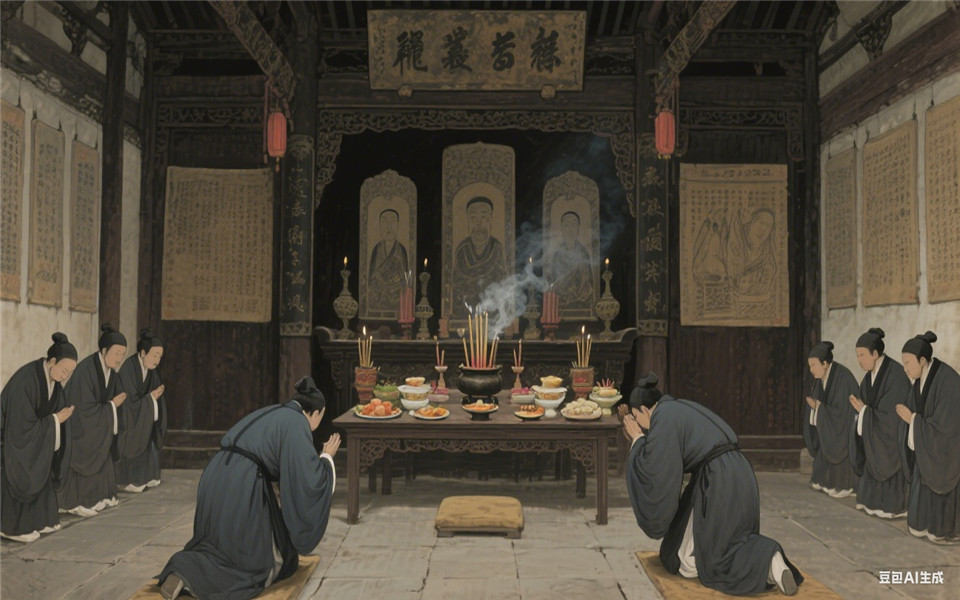
Shanghai Yongzhen Temple: Qing Dynasty Taoist Echoes Lost Along Bailian Creek
Amidst the lush greenery of today’s Bailian Creek Park in Pudong New Area once stood Yongzhen Temple, a Taoist sanctuary bearing the cultural memory of Qing Dynasty Shanghai. Though this religious structure, built in the 20th year of Emperor Kangxi’s reign (1681), has vanished into the dust of history, scattered records in local annals and shifts in the geographical landscape reveal glimpses of the spiritual landscape in the Jiangnan water towns over three centuries ago.
1. A Spiritual Anchor at a Water-Land Crossroads
Yongzheng Temple’s location on the northern bank of Bailianjing Creek in Shanghai County was no coincidence. As one of the “Eight Creeks of Ancient Shanghai,” Bailianjing had served as a vital waterway connecting Zaomen Port to the Huangpu River since its excavation by salt workers during the Song and Yuan dynasties. The Ming Dynasty’s Hongzhi Annals of Shanghai explicitly documented its geographical position, while Lin Zexu’s Qing-era administrative records further described its prosperity as “waterways flowing smoothly, fields stretching with rice and cotton.” This pivotal role in land and water transportation gradually fostered settlements along Bailianjing, laying the social foundation for religious architecture.
Though details about its founder Sun Dajing remain scarce, historical precedents of Qing-era local gentry engaging in public affairs suggest his initiative stemmed both from religious fervor and considerations for stabilizing local order. At that time, the Bailianjing basin served as a bustling commercial waterway for grain transport while also facing frequent floods that fostered a need for spiritual solace. The establishment of Yongzhen Temple precisely addressed this dual demand. Despite administrative boundary changes, the site now falls within Zhoujiadu Subdistrict of Pudong New Area. Though the river underwent channel straightening in 1977 and port closure in 2007, the temple’s geographical coordinates remain inextricably linked to Bailianjing’s historical lifeline.
2. A Diverse and Symbiotic Pantheon
Yongzhen Temple’s religious essence manifests through its enshrined deities. Historical records document the worship of Doumu Yuanjun, the Three Officials, the True Martial Emperor, and Lü Dongbin, forming a pantheon that blends Taoist cosmology with practical folk beliefs. The veneration of the True Martial Emperor merits particular attention—as the legendary northern water deity who “subdues floods and calms waves,” his statue’s placement directly relates to Bailianjing’s hydrological environment. The Qing-era practice of constructing Zhenwu temples along riverbanks and ferry crossings in southern China stemmed precisely from reverence for water hazards, and Yongzheng Temple undoubtedly perpetuated this devotional tradition.
The charity well pavilion outside the temple gates embodies Taoism’s practical ethos of “benefiting the world and serving humanity.” Along the bustling shipping route of Bailianjing, this public well provided drinking water for passing merchants and travelers while strengthening the temple’s connection to the local community through the act of “offering water.” This integration of religious function with public service reflects the secularization of folk beliefs during the Qing Dynasty, transforming Yongzheng Temple from a spiritual sanctuary into a vital hub of community life.
3. Obscurity and Echoes Through the Ages
While historical records offer no definitive date or cause for Yongzheng Temple’s abandonment, clues emerge from the developmental trajectory of the Bailianjing basin. After the 19th century, with the construction of facilities like the American-owned Dalaidock, Bailianjing gradually transformed from a traditional canal for grain transport into an industrial port area. By the Republican era, it had become “the county’s largest cargo-handling port,” and by the 1970s, it served as a major transshipment hub for sand and gravel. In this transition from an agricultural society to industrial civilization, religious spaces often yielded to productive ones. The disappearance of Yongzhen Temple may well epitomize this process.
Today, Bailianjing has been transformed into a green belt within the World Expo Park, and no traces of Yongzhen Temple remain. Yet this vanished Taoist temple leaves behind a significant historical footnote: it bears witness to the close connection between Qing Dynasty Shanghai’s Taoism and its water environment, demonstrates the diverse and inclusive nature of folk beliefs, and reflects the logic of urban spatial transformation amid the tides of time. As modern visitors stroll along the paths of Bailianjing Park, they may scarcely imagine the incense smoke that once swirled and the resonant temple bells that once echoed beneath their feet. Yet this fading memory is precisely a vital fragment for understanding the cultural roots of Shanghai’s urban identity.