
The Echoes of a Thousand Years at Chongfu Taoist Temple
Deep within the waterways of Sanlin Town in Minhang District, Shanghai, Chongfu Taoist Temple lies like a pearl polished by time, quietly embedded in the veins of the Jiangnan water town. This Taoist sanctuary, hidden among lush forests, features a layout surrounded by water on three sides. This design aligns with the Taoist philosophy of “unity between heaven and humanity” while also reflecting the Jiangnan architectural wisdom of “living by the water,” granting it a serene ambiance amidst the bustling metropolis.
The exact date of the Chongfu Daoist Temple’s founding has been lost to history, with the earliest documented record dating back to the first year of the Xuanhe era of the Northern Song Dynasty (1120), when the imperial court bestowed the title “Holy Hall,” officially recognizing it as a Daoist site. Despite enduring the vicissitudes of the Song and Yuan dynasties, the Daoist temple faced repeated wars and floods during the Ming and Qing dynasties, yet it always managed to rise from the ashes—the local annals’ records of “repeated destruction and reconstruction” are not merely about the replacement of bricks and stones, but also a testament to the enduring transmission of faith. During the Republican era, local gentry Ren Zhaoquan raised funds for a major renovation, allowing this ancient Daoist temple to continue its traditions amid turbulent times. The beams and columns, weathered by time, still tell the story of resilience in times of chaos.
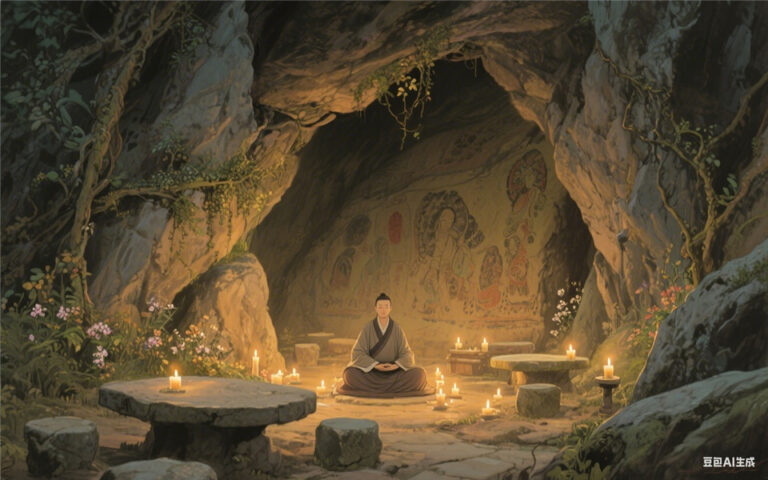
Looking back, the Daoist temple once comprised a complete complex of buildings: the front hall welcomed pilgrims, the rear hall housed the main deity, the Ci Hang Hall featured a statue of Guanyin with compassionate eyes, the City God Hall held a majestic deity, the Yan Luo Hall’s murals implied karmic warnings, and the Wen Chang Pavilion embodied the villagers’ aspirations for the flourishing of literary traditions. These buildings each served their respective functions, forming a complete Daoist cultural space that not only met the worship needs of believers but also carried the spiritual aspirations of the local community.
Although most of the buildings at Chongfu Taoist Temple were constructed in recent years, they have preserved the essence of ancient traditions. Upon entering the mountain gate, the first structure to catch the eye is the Ci Hang Hall, whose intricate painted decorations feature swirling clouds ascending the columns, symbolizing the concept of “Ci Hang’s universal salvation.” In the central hall, the statue of the Supreme Emperor of the North is solemn and majestic, with flowing hair and a sword in hand, vividly recreating the dignity and compassion of Daoist deities. The side rooms and corridors connect the entire complex, with intricately carved beams and painted rafters blending Daoist Bagua symbols with Jiangnan floral and bird patterns. The architecture combines the solemnity of religious buildings with the delicate beauty of a water town.
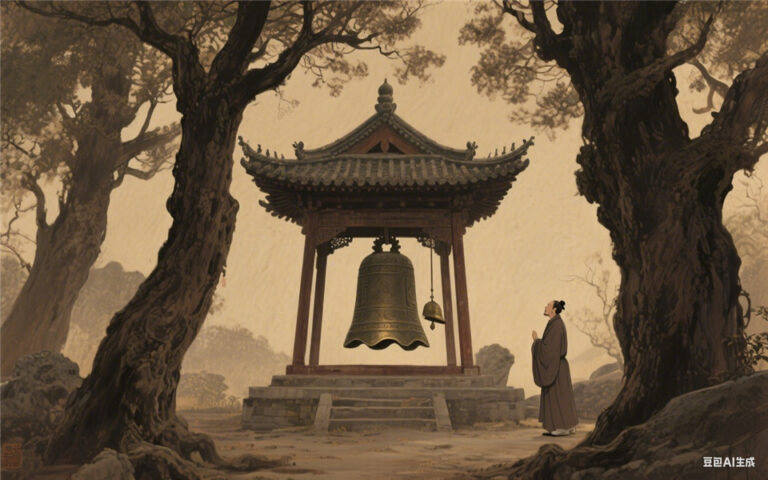
Since its restoration and reopening in 1987, this major Zhengyi School Daoist temple in Shanghai has not only revived traditional Daoist rituals but also become an important window for showcasing local religious culture. Amidst the morning bells and evening drums, devotees bow in worship, while visitors pause to reflect, creating a harmonious blend of ancient Daoist traditions and the rhythm of modern urban life. As the setting sun filters through the eaves of the hall, casting mottled shadows on the blue stone slabs, one seems to hear the echoes of a thousand years—the philosophical musings of Daoist teachings, the enduring faith of life, and the deep cultural roots of Shanghai, this international metropolis.