
The Taoist Charm of Shuangfeng Mountain: A Record of Fengtai Qingtianguan
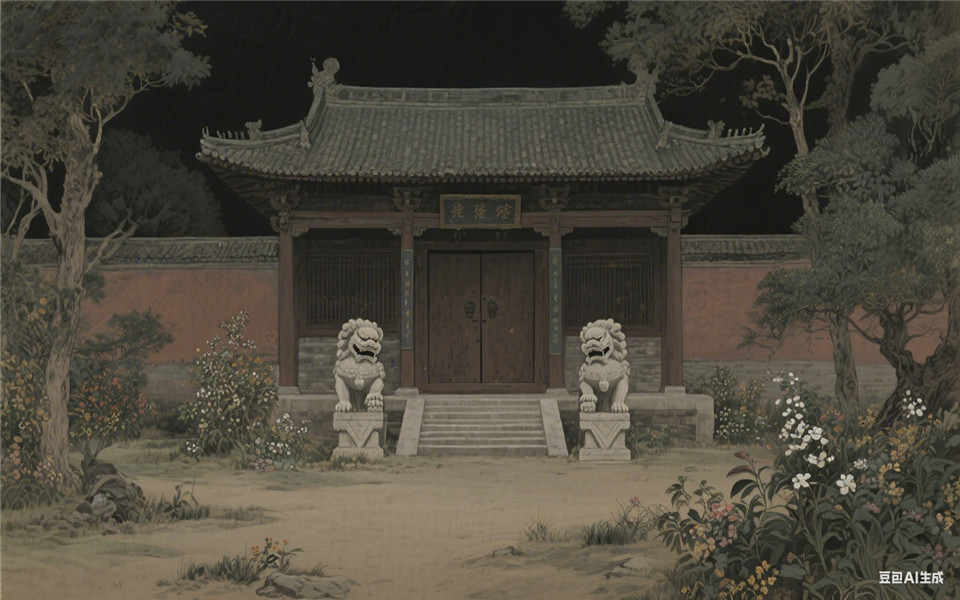
At the foot of Shuangfeng Mountain on the outskirts of Fengtai County, Anhui Province, a thread of Daoist tradition spans over two thousand years, quietly flowing amidst the ripples of the Nao River and the lush greenery of the mountains and forests. Here stands the Qing Tian Guan, a historically significant Daoist temple in northern Anhui Province. Its silhouette of blue-tiled roofs and black-tiled walls is seamlessly integrated into the landscape, exuding both ancient grandeur and a serene, secluded charm.
Trace the origins of Qing Tian Guan back to the Ming Dynasty’s Jiajing period, as recorded in the “Shouzhou Zhi” (Shouzhou Gazetteer): During the Diji period (69–66 BCE) of Emperor Xuan of Han, it was personally founded by Mao Ying, the “Great Mao Lord” of Daoism. As one of the patriarchs of the Mao Mountain Shangqing School of Daoism, Mao Ying established his teachings here, sowing the first seeds of Daoist philosophy on this land. However, the fate of this Taoist holy site was not smooth sailing. Over the centuries, it was repeatedly occupied by Buddhism, with the identities of Taoist temple and Buddhist monastery alternating over time, creating a unique layered religious culture. It was not until the 17th year of the Guangxu reign of the Qing Dynasty (1892) that, after repairs and restoration, Qing Tian Guan once again became the center of Taoist activities, a status it maintains to this day.
The selection of the site for Qing Tian Guan is a vivid interpretation of the Daoist concept of “unity between heaven and humanity.” It is backed by Shuangfeng Mountain, whose peaks resemble wings embracing the site, both capturing the energy of the dragon vein and gathering wind and qi; it faces the Nao River, whose winding waters add a sense of vitality while embodying the meaning of “the highest good is like water.” Standing before the temple and looking out, the mountains and rivers complement each other beautifully, and birds chirp among the trees. It is no wonder that ancient people chose this location to build the temple, seamlessly blending natural beauty with the path of cultivation.
The temple’s architecture once served as a model for Daoist buildings in the Jianghuai region. The mountain gate is simple yet imposing, with the characters “Qing Tian Guan” on the lintel written in bold strokes, exuding the upright spirit of Daoism; The Three Immortals Pavilion houses the deities of Daoism, with its eaves curving upward and its colorful paintings faded by time, yet it stands as a testament to the passage of the years; The main hall served as the primary venue for activities, once filled with incense smoke and the melodious sounds of Daoist music. Though the carvings on the beams and columns have weathered the elements, their former elegance remains evident; The Kui Bi Hall, guest hall, and Daoist quarters form a complete living and meditation space, fulfilling religious functions while blending practicality and aesthetics.
As an important Daoist temple of the Quanzhen School in Anhui Province, Qing Tian Guan not only carries the weight of history but also continues the Quanzhen School’s tradition of “unifying the three teachings” and “internal cultivation and external refinement.” Today, although some of the buildings have changed with the passage of time, the Taoist aura that has settled in the mountains and waters remains strong. Every Taoist festival, believers and tourists still come here to feel the spiritual power of this ancient Taoist temple that has spanned thousands of years in the tranquility of Shuangfeng Mountain and the flowing waters of the Nao River.
The story of Qing Tian Guan is a microcosm of the transmission of Daoist culture across the Jianghuai region. It has endured through historical changes, been nurtured by the landscape, witnessed the rise and fall of religions, and become a cultural bridge connecting past and present. Every visitor who approaches it can discern an ancient wisdom about faith and nature amidst its blue-tiled roofs and wooden beams.