
Tianhou Temple in Zhenyuan, Guizhou: The Sea Goddess’s Abode by the Yuyang River
Nestled amidst the mountains of southeastern Guizhou, the millennia-old town of Zhenyuan shines like a pearl along the banks of the Yuyang River. Within the town’s western precincts stands Tianhou Temple, a unique architectural gem that embodies both maritime heritage and regional character. Leaning against the verdant Shiwu Mountain and facing the rippling waters of the Yuyang River, it seamlessly blends the spirit of mountains and waters with the charm of human culture, becoming an indispensable part of Zhenyan’s historical and cultural landscape.
1. Nestled Between Mountains and Water: The Geographical Layout of Tianhou Palace
The site selection for Zhenyan’s Tianhou Palace demonstrates remarkable ingenuity, fully embodying the traditional architectural concept of “harmony between heaven and humanity.” The exposed rock formations and dense vegetation of Shiwu Mountain, which backs the palace, not only provide a sturdy natural barrier but also lend the structure an air of solemnity against the backdrop of the verdant hills. A mountain stream murmurs softly, winding its way down the slopes, adding a touch of vitality to the temple.
Facing the temple lies the Yuyang River, the very soul of the Tianhou Temple. As Zhenyuan’s mother river, the Yuyang flows gently here, its surface broad and open. In ancient times, it was a vital waterway bustling with merchant ships. For the Temple of the Heavenly Empress, dedicated to the sea goddess, the Yuyang River serves both as a vital artery connecting the outside world and as a vessel for devotees’ prayers for safe voyages. Standing before the temple and gazing at the boats traversing the river and the stilt houses lining its banks, one can almost envision the bustling scene of Zhenyan as a thriving water and land port in days gone by. This layout, nestled against mountains and beside water, allows the temple to remain removed from the town’s bustle while remaining deeply connected to the ancient town’s water transport culture.
2. Ingenious Craftsmanship: The Main Hall’s Architectural Design
The main structure of the Tianhou Temple is the main hall, whose architectural style adheres to traditional temple regulations while incorporating regional characteristics of Guizhou. The main hall features a double-eaved hip-and-gable roof—a high-status design with upturned eaves and ornate ridge decorations. Under sunlight, the glazed tiles refract brilliant light, showcasing its majestic grandeur.
The double-eave design serves both aesthetic and practical purposes. The upper eaves effectively shield the underlying timber structure from rain, while the lower eaves create shade within the hall, protecting worshippers from sun and rain during ceremonies. Towering firewalls flank the main hall, constructed with blue bricks and topped with stepped tiers. These walls serve both as fire barriers and as architectural elements that add depth and dimension to the building’s silhouette. The interplay between the firewalls and the main hall creates a harmonious, layered composition that highlights the masterful craftsmanship of ancient artisans.
3. The Sea Goddess’s Sanctuary: The Heavenly Empress Worshiped Within
At the heart of the main hall lies the worship of the Sea Goddess, the Heavenly Empress. Also known as Mazu, she is revered as the patron deity of the seas by coastal communities. The presence of a Mazu Temple in Zhenyuan, an inland town, stands as a testament to the ancient town’s historical trade connections with coastal regions. Historical records indicate that during the Ming and Qing dynasties, Zhenyuan leveraged the water transport advantages of the Yuyang River to become a vital commercial hub in Southwest China. Merchants from Fujian, Guangdong, and other regions gathered here in large numbers. To pray for safe voyages and prosperous trade, they constructed this Temple of the Heavenly Empress.
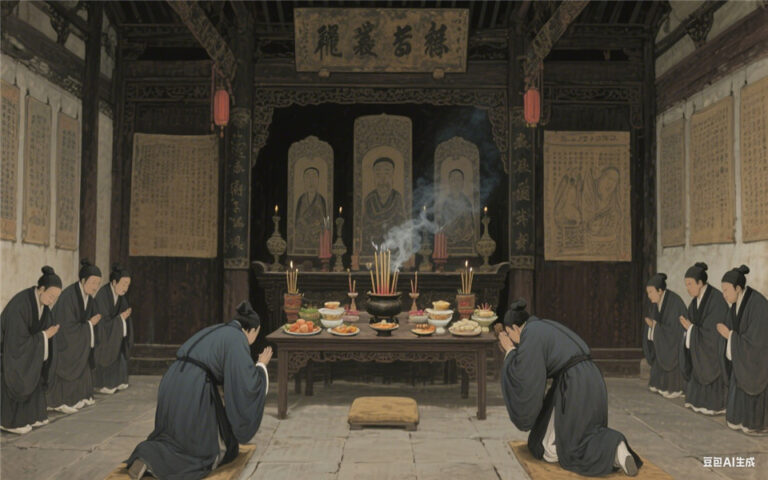
The statue of the Heavenly Empress within the hall stands dignified and solemn, adorned in splendid robes and holding ritual implements, as if guarding passing ships and the people. Incense burners, candlesticks, and other ritual objects are placed on either side of the statue. The hall is perpetually filled with the scent of incense, and devotees come in a steady stream. Beyond the goddess statue, the hall displays numerous plaques and couplets inscribed with hymns to Mazu and inscriptions by past merchants and officials. These artifacts serve as vital physical evidence for studying Zhenyuan’s commercial history and religious culture.
The Zhenyuan Temple of the Heavenly Queen is not only an architectural treasure but also a living testament to history. Nestled against Shiwu Mountain and facing the Yuyang River, it narrates Zhenyuan’s enduring connection to maritime culture through its unique geographical setting, exquisite craftsmanship, and profound cultural significance. It stands as a vital site where people today can immerse themselves in history and explore cultural heritage.