Zhenwu Temple of Lou County: A Taoist Treasure of a Millennium-Old County
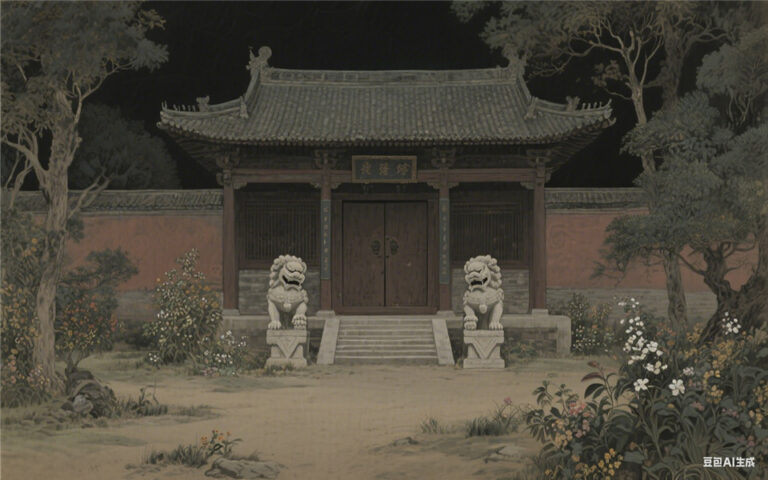
In the historical annals of Songjiang, Shanghai (formerly known as Lou County), Zhenwu Temple once stood as a Taoist sanctuary embodying local faith and folk traditions. Though this ancient temple, once situated at Jiuliting in the northwest of the former Lou County, has faded into the annals of time, its construction history spanning the Ming and Qing dynasties vividly traces the evolution of Taoist culture in the Jiangnan region.
I. Founding and Reconstruction: Three Centuries of Carving by Time
The founding of Zhenwu Temple traces back to the Hongzhi era (1488–1505) of the Ming Dynasty, overseen by Zhou Zhongwei, then Director of the Daoist Affairs Office of Songjiang Prefecture. As a key official in the Ming Dynasty’s Daoist administrative body, Zhou’s selection of Jiuliting as the temple site reflected both Daoism’s influence in local society and the government’s support for Daoist culture at the time. After its completion, the temple became a vital site for local devotees to pray for blessings and ward off calamities.
By the Jiajing era (1522–1566), the temple had fallen into disrepair due to neglect. Taoist priest Gu Congzheng initiated a major restoration project. This renovation not only reinforced the main hall’s structure but also added side halls and stone inscriptions, significantly expanding the temple’s scale. By the twelfth year of the Shunzhi reign (1655) in the Qing dynasty, local gentry Gao Zhigui led villagers in another restoration effort. As a prominent figure in the community, Gao mobilized extensive grassroots participation for this renovation. This initiative not only underscored the temple’s significance in the hearts of the people but also reflected the local society’s commitment to preserving traditional culture following the transition from the Ming to the Qing dynasty.
II. Architectural Layout and Divine Worship: Material Manifestations of Taoist Culture
Historical records indicate the temple’s layout adheres to traditional Taoist palace-temple standards, oriented north-south with a central axis featuring the mountain gate, front hall, main hall, and rear hall. The mountain gate stands flanked by statues of the Generals Hum and Ha. The front hall enshrines the Divine Protector Lingguan, who safeguards the temple as a Taoist guardian deity. The core structure, the main hall, houses a seated statue of the True Martial Emperor. The deity is depicted with disheveled hair, bare feet, and a sword in hand, radiating solemn authority. The beams and rafters of the hall are adorned with colorful paintings depicting Taoist themes, including stories such as the Eight Immortals Crossing the Sea and the Manifestation of the True Martial Emperor, possessing significant artistic value.
As a major Taoist deity, the True Martial Emperor presides over the Northern Constellation of the Black Tortoise and is responsible for averting disasters, protecting the land, and ensuring the people’s safety. The worship system at Lou County’s True Martial Temple highlights the central role of the True Martial Emperor while also including deities like the Lord of Literature and the Lord of War, catering to the diverse needs of the local populace—such as prayers for success in imperial examinations and blessings for commercial prosperity. This reflects the deep integration of Taoism into local social life.
III. Cultural Influence: A Sacred Landmark in an Ancient County
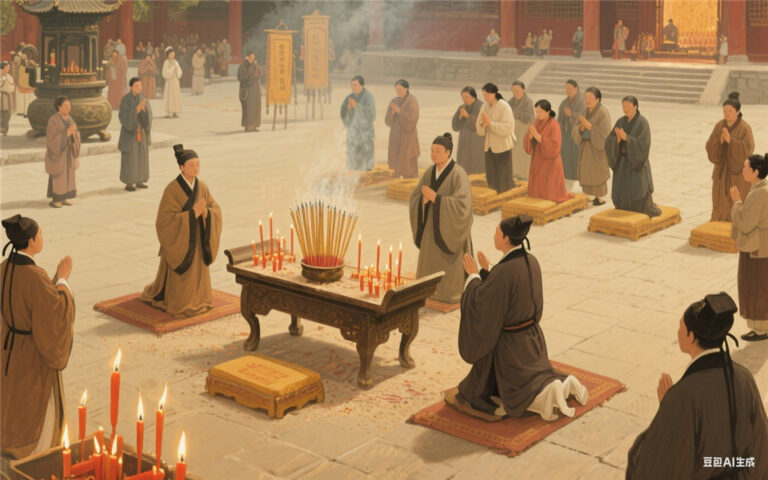
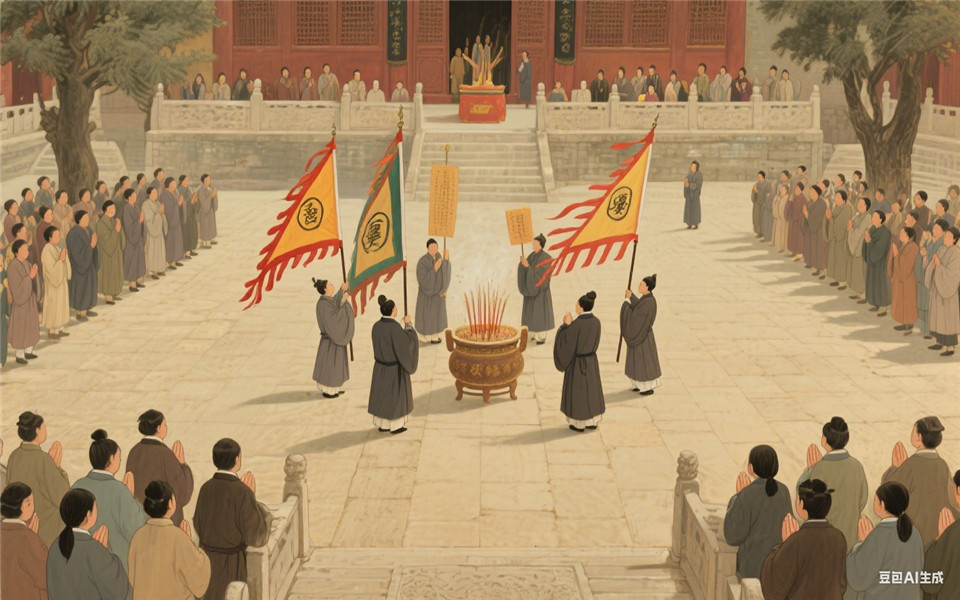
During the Ming and Qing dynasties, the Zhenwu Temple in Lou County served not only as a religious site but also as the hub of local cultural and folk activities. On the third day of the third lunar month—the birthday of the Great Emperor Zhenwu—grand temple fairs were held annually. Local residents flocked to burn incense and pay homage, while folk performances like opera and acrobatic competitions created a vibrant festive atmosphere. This fusion of religious devotion and folk entertainment greatly enriched the spiritual lives of the people and facilitated regional trade.
Although the Zhenwu Temple in Lou County no longer exists today, the historical records and folk memories it left behind provide crucial material and documentary evidence for studying the development of Taoist culture in the Shanghai region, as well as the local social structure and folk customs during the Ming and Qing dynasties. It remains an indispensable part of Songjiang’s historical and cultural heritage.